Naxxramas proved to be a successful experiment in reworking old content for new realities. So, in the small, intermediate content patch 3.2.2, Blizzard decided to revive the daughter of the Black Dragonflight’s leader, Onyxia.
Previous: WoW Player Diary. Part 9. Casuals storm Ulduar
Return of Onyxia
It’s worth noting that Onyxia was arguably the very first raid boss in WoW. Back at vanilla WoW’s launch, only two raids were available: the huge Molten Core (with twelve bosses and tons of trash) and Onyxia’s Lair, which featured just a couple of small trash packs and then the dragon herself. In that original version, the raid was designed for forty players.
My first raid in Onyxia’s Lair was after Patch 3.0.2, which removed the long attunement quest chain needed to enter the instance. Fifteen level-70 players trampled the poor lizard in about ten minutes. I went back several times in the spring of 2009 when the guild was actively doing “fun raids” into older content. I teamed up with one of our ‘imba’ paladins to farm her three times, mostly so I could skin her. Actually, he mainly brought me along so someone could skin her, since he’d already soloed her multiple times.
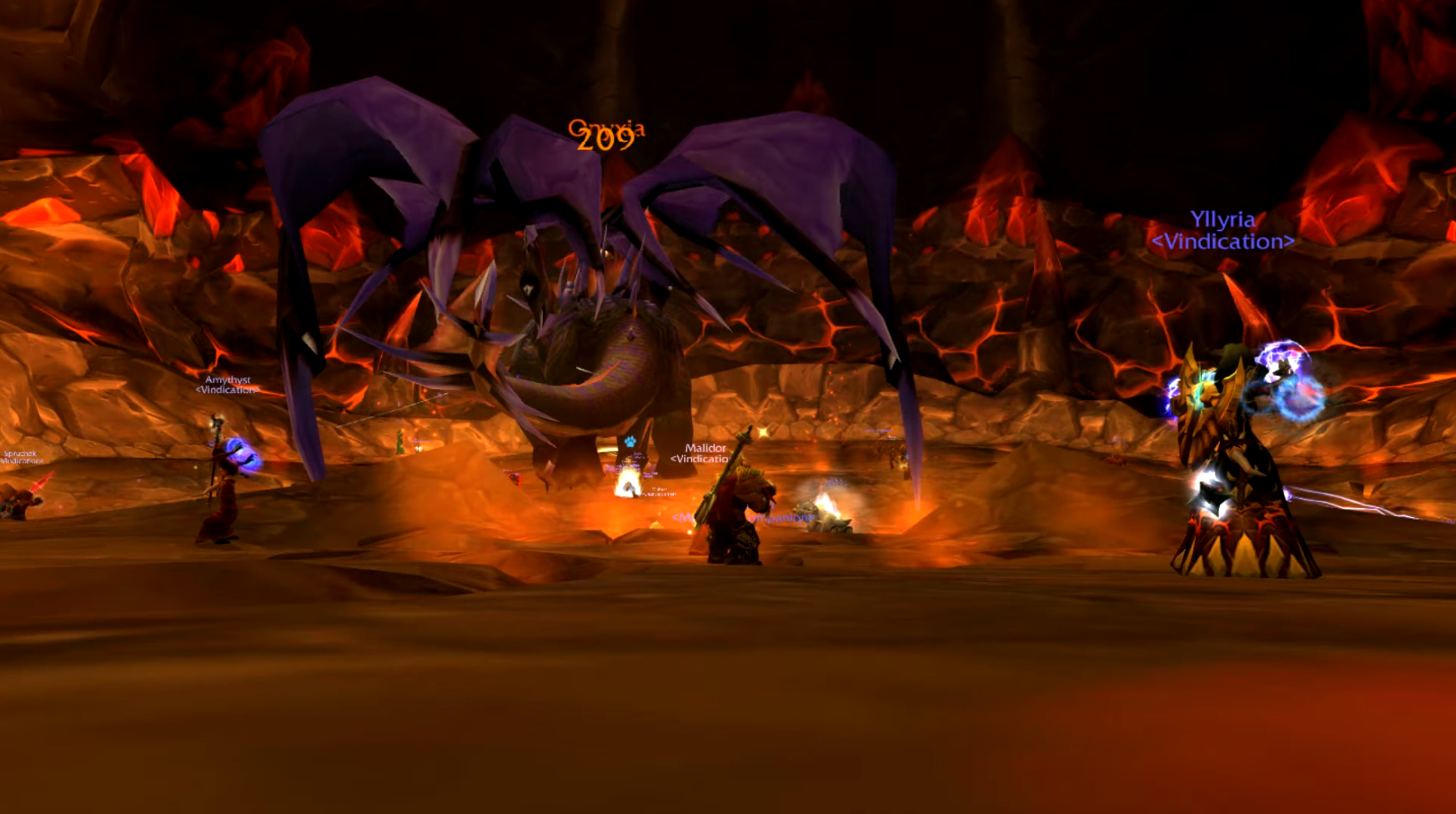
The last time I saw the original Onyxia-40 was in September 2009. It was our second run that month, and this time it went slightly better. We got through the first phase almost without issue, but I died during the whelp phase. One of our mages, who’d never been in the instance before, joined me on the floor soon after – the whelps hit hard, Onya’s Deep Breaths were dangerous, and we lacked healing. In the end, we called in the same ‘imba’ paladin, decked out in ilvl 226-245 gear, and this time the lizard died in about five minutes. Two Tier 2 Warrior helmets dropped.
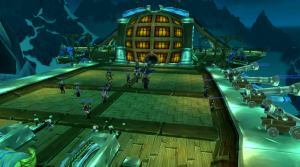
Patch 3.2.2 itself wasn’t revolutionary. Patch 3.2 overall felt like transitional content, primarily designed to help players gear up for Patch 3.3. The reincarnation of Onyxia into updated 10/25-player versions was decent, though. Blizzard essentially created another quick loot piñata, similar to the Vault of Archavon bosses – another farm zone with minimal trash and a single boss easily doable by both organized raids and PUGs (pick-up groups). The new coveted reward, a rare mount drop (the Reins of the Onyxian Drake), continues to attract players even today.
At the peak of popularity
In my opinion, Wrath of the Lich King, especially its second half (roughly 2009-2010), marked the peak of WoW’s popularity, coinciding with its record subscriber numbers.
Interestingly, for almost a year after WotLK launched, Blizzard’s press releases didn’t boast about population growth. The last official figure, from January 2009, stated that subscribers had exceeded 11.5 million. Issues with the WotLK launch in China, including complications with the local provider and server shutdowns, might have been the reason for the silence. However, other signs indicated the player base had stabilized, and the developer’s focus shifted towards retaining existing subscribers rather than purely chasing growth.
What factors suggested this shift? Several things pointed towards making the game more accessible and faster to progress through:
- The “Recruit-A-Friend” program offered triple experience gains.
- Low-level players received access to cheap, faster mounts much earlier (almost right out of the starting zones), speeding up quest completion.
- The experience required per level was significantly reduced, particularly in the Outland (60-70) range.
- The difficulty of 5-player dungeons, which veterans told me had already been reduced back in TBC (summer 2008), felt like it had been nerfed even further.
- Heirloom items were introduced, specifically designed for veterans wanting to quickly “pump an alt” for a different raid role.
It seemed Blizzard created every possible condition to get both new players and those leveling their second or third character to the level-80 endgame content in Northrend as quickly as possible. Speaking bluntly, Blizzard effectively treated levels 1-70 content as largely irrelevant. No significant attempts were made to revitalize old zones with new quests or update classic dungeons for higher levels, despite player requests. The plot in these old zones remained frozen in the post-Vanilla timeline, which felt increasingly illogical as the main story advanced.
But even with players being funneled towards Northrend, the challenge of raid content remained a barrier for many. Statistics suggested that only 15-20% of players in TBC saw bosses beyond the initial tiers; many guilds never progressed past Karazhan or Zul’Aman. I think Blizzard realized that with the vast majority of subscribers now at level 80, the key to retention lay in reforming raiding structure and accessibility. This led to:
- Creating both 10- and 25-player versions of raids.
- Making starting raid instances (like Naxxramas) considerably easier.
- Introducing single-boss encounters with minimal or no trash (Vault of Archavon, Sartharion, the revamped Onyxia).
- Implementing optional hard modes in higher-tier raids (Ulduar, Trial of the Crusader, Icecrown Citadel). This “stretched” the difficulty, offering a manageable normal mode for most while retaining hardcore challenges for top players.
- Radically changing the emblem system and expanding crafted epic gear options (recipes from Ulduar and ToC), decoupling gear progression somewhat from strict raid boss kills.
- Allowing guilds to extend their raid lockouts by a week.
- Adding a two-hour window to trade mistakenly looted items within the raid.
These changes meant that even very casual players now had meaningful endgame activities beyond grinding the same instances for months. Conditions were optimized to keep players engaged in “relevant raid content.” As I discussed earlier regarding “casualization,” these changes fit the trend of “stretching the difficulty.” Despite simplifying aspects like leveling, plenty of hardcore challenges remained – not just raid hard modes, but also things like meta-achievements (the “Insane” or “Salty” titles), hunting the Time-Lost Proto-Drake, or taming rare hunter pets. There was still plenty for players seeking real difficulty and exclusive rewards.
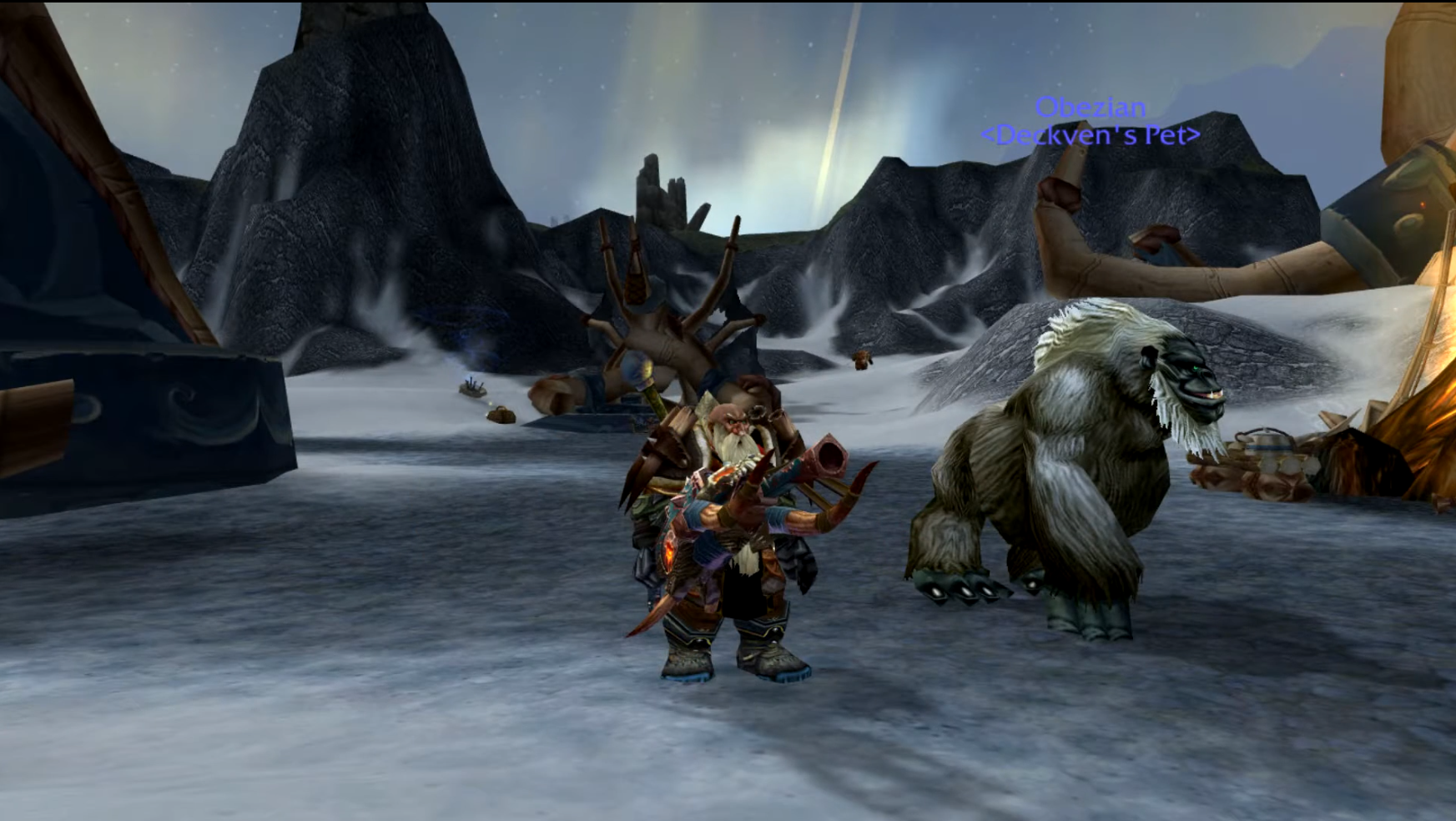
At the crossroads
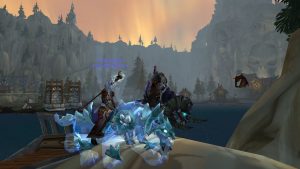
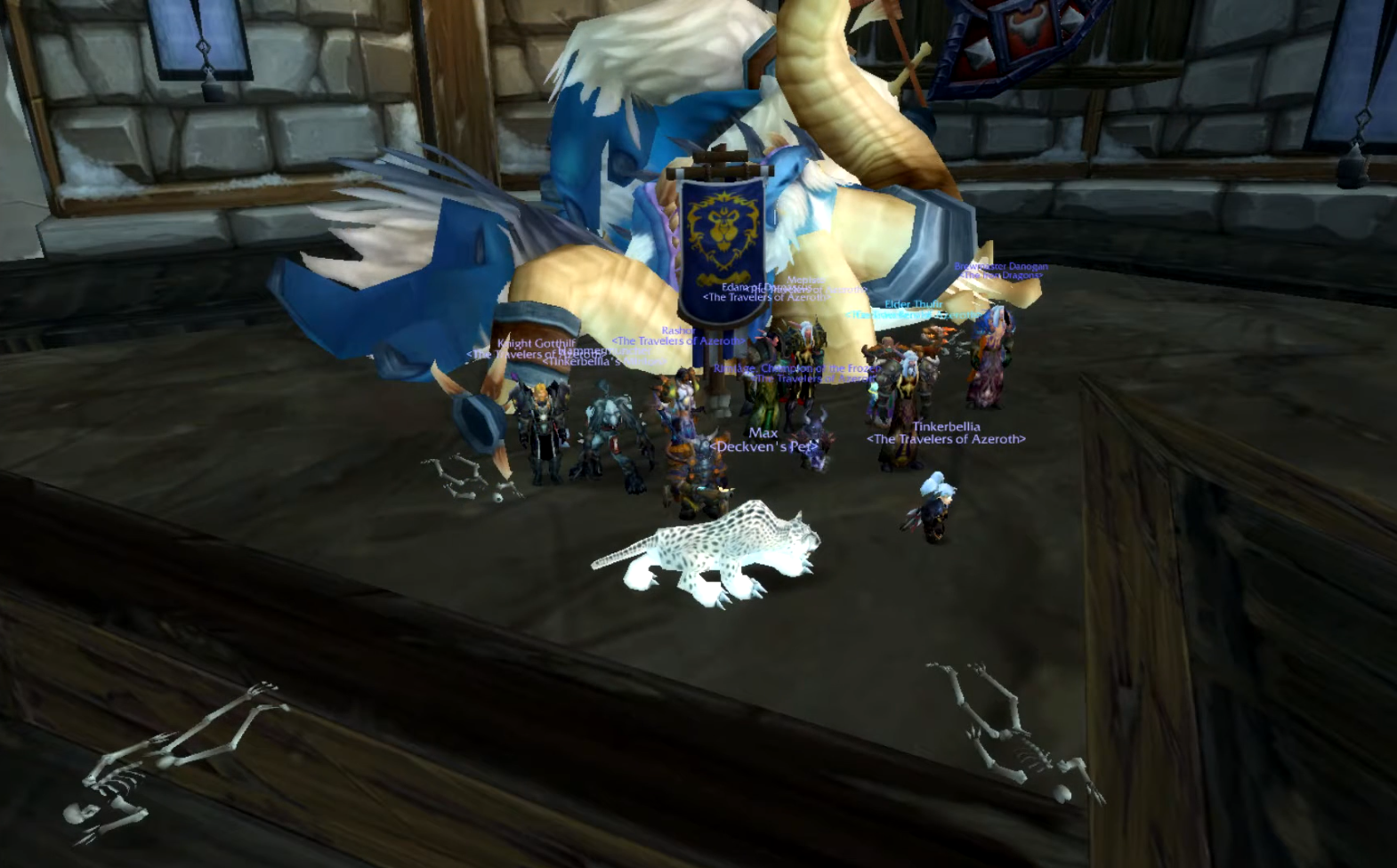
In early October 2009, I wrote a blog post about my raiding experiences. I talked about how the guild had killed the first boss in Trial of the Crusader (ToC), and how we’d attempted Ulduar again but had to stop after six bosses because the offtank disconnected. The post included some mild grumbling and a screenshot of our group proudly standing over the corpse of the Northrend Beasts (the first ToC encounter).
The comments on that post were… revealing:
“ToC 10 normal is cleared by ten drunk noobs in ilvl 213 gear. How you guys are still ‘progressing’ on ToC10 is beyond me. Absolutely beyond me.”
“If you want any real progress, you definitely need to change guilds. Hunter [another commenter], although he spoke like a stupid noob, is kind of right. The Coliseum is much easier than Ulduar (excluding hard modes). ToC10 has been PUG-able almost since release.”
“Hunter actually expressed it well. You can write a wall of text or one phrase, the essence is the same… People who understand raiding get it immediately, no need to philosophize – change your guild! A screenshot of a guild team killing the first boss in ToC10 normal months after the patch is… touching.”
“Deck, leave this guild. One raid night doesn’t mean anything. If you don’t want to go to the ‘ruv-reservation’ [likely referring to Russian-language servers], transfer to another realm. You won’t get the progress you want in this guild.”
“2 Deckven. Don’t be offended – people are telling the truth, and I agree with many here. ToC10 (and 25) is a crappy joke instance now and easily cleared by people in ilvl 200-219 gear.”
A long thread followed (nearly fifty comments) debating “casual raiding,” my lack of progress, and why I needed to get out of the “province” – referring to my server, Moonglade-EU, which was indeed low-ranked on Wowprogress (around 200th+ among European servers at the time).
This discussion finally pushed me over the edge. I realized I needed to change not just my guild, but my realm too. Over the year and a half I’d been playing, I felt I’d grown as a player. Just as I was responsible in real life, I applied the same attitude to raid preparation – researching fights, bringing consumables (‘chemistry’ and food), and being on time. Unfortunately, the same couldn’t be said for all my guildmates. People often showed up late, unprepared, undergeared, and sometimes petty drama erupted – like one player rage-quitting because someone they’d argued with on the forums was also in the raid group. (A quick note for newer players: Before Patch 5.2 in Mists of Pandaria, raid sizes were fixed – exactly 10 or exactly 25 players. There was no flexible scaling like in modern Flex raids. Being even one person short significantly impacted DPS/healing and could halt progress. If one person was late, the other nine (or twenty-four) often just had to wait.)
Honestly, I didn’t want to leave. I had good friends on the server, and the general chat channels often had interesting, leisurely conversations about non-game topics. But I genuinely craved progression, and my current casual environment was starting to frustrate me.
I wrote another blog post announcing my intention to transfer, which generated another huge comment thread – I think it still holds the record on my blog with over a hundred replies. By then, the blog had gained some traction, attracting comments from players across the spectrum, from casual to hardcore.
I decided to transfer to Gordunni.
Next: WoW Player Diary. Part 11. Transfer to Gordunni realm and path 3.3 release