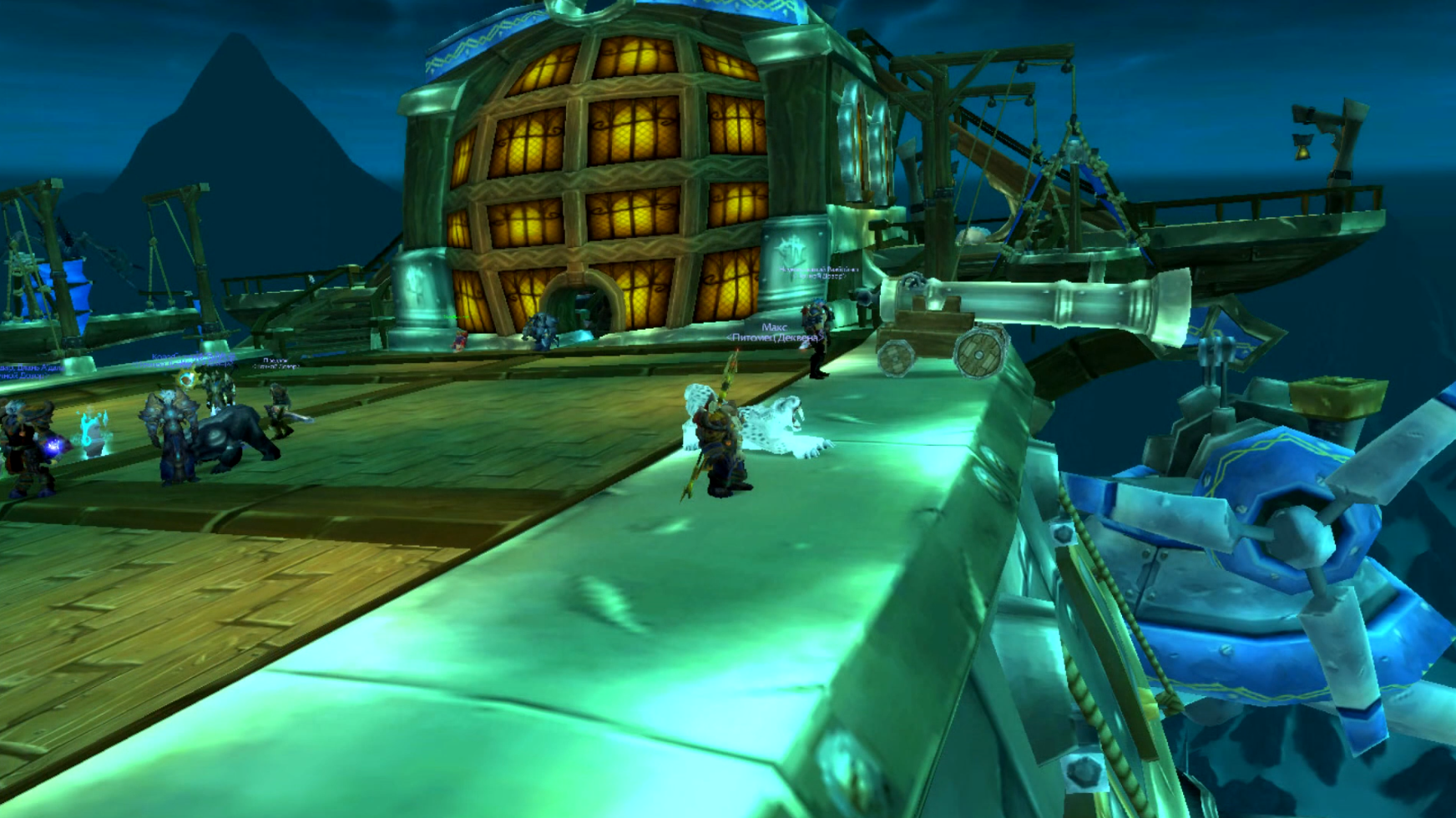
My transfer to Gordunni hit a snag due to technical reasons. For some reason, the card payment wouldn’t go through, so I had to visit the bank and get online payments activated. Eventually, though, everything was sorted.
Previous: WoW Player Diary. Part 10. Onyxia is back
Transfer to Gordunni realm
I logged in, deleted the toon I’d made to reserve my name, and renamed my main. Deckven, the Dwarf Hunter from Moonglade-EU, effectively “converted to Orthodoxy.” And so, Deckven the Hunter appeared on the Gordunni server and was kindly welcomed into the “Night Watch” guild.
I had two main reasons for switching to the top PvE server in the “ru-tab” (the Russian WoW community). Firstly, I wanted to actually complete the content, not just “suffer” through it. In our last Ulduar-10 raid on Moonglade, we’d only managed to down Hodir and Thorim. I seriously doubted we would have ever beaten Freya, let alone Mimiron. I was determined to clear Ulduar and finally see Yogg-Saron (meaning, defeat him). Secondly, on a server with such a high concentration of hardcore guilds, I figured there’d be plenty of material for my blog. I planned to focus more on news from the Russian WoW community, which I felt was generally underreported. Later on, I even managed to interview two top Russian guilds: “Quantum” and “Exorsus.”
Back on Moonglade, I left behind my druid, Zinzarina – a Night Elf blonde I’d intended to be my new European main. My bank alt, Terafina, inherited a load of Deckven’s junk and a couple of thousand gold to manage Zinzarina’s finances. As it turned out, I never really found the time to play my European alts after the transfer.
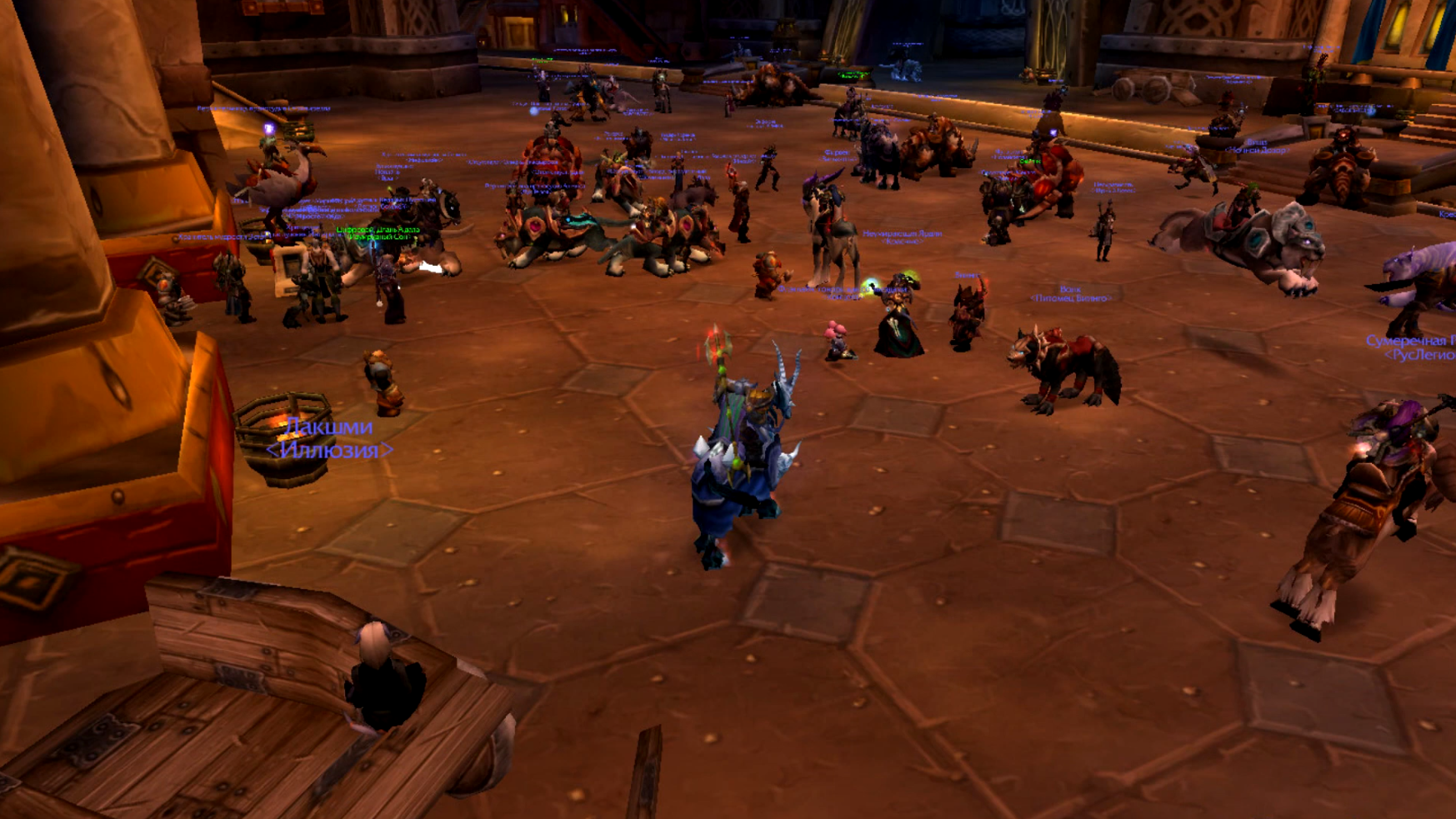
About three weeks into my Gordunni experience, the server’s notorious issues – queues and lag – became apparent. I didn’t encounter the wild lag I’d seen on my transfer day. Generally, if you steered clear of Dalaran, things were mostly fine. Latency hovered around 150-280 ms, occasionally spiking over 300 ms, but nothing game-breaking. Queues weren’t a huge problem initially either. Even with 200-300 people waiting, I could just alt-tab and catch up on news. If you logged in after 11 PM Moscow time, or during the daytime, there were usually no queues at all. This became a much bigger headache later, when Patch 3.3 (Icecrown Citadel) dropped, and queue times exploded, often stretching to an hour or more.
At first, I really liked the guild. In guild chat, people discussed not only PvE “everyday life” but also general topics. Their sense of humor, overall “adequacy” (maturity and common sense), and manners were all good. So, the transition from one friendly group to another went smoothly.
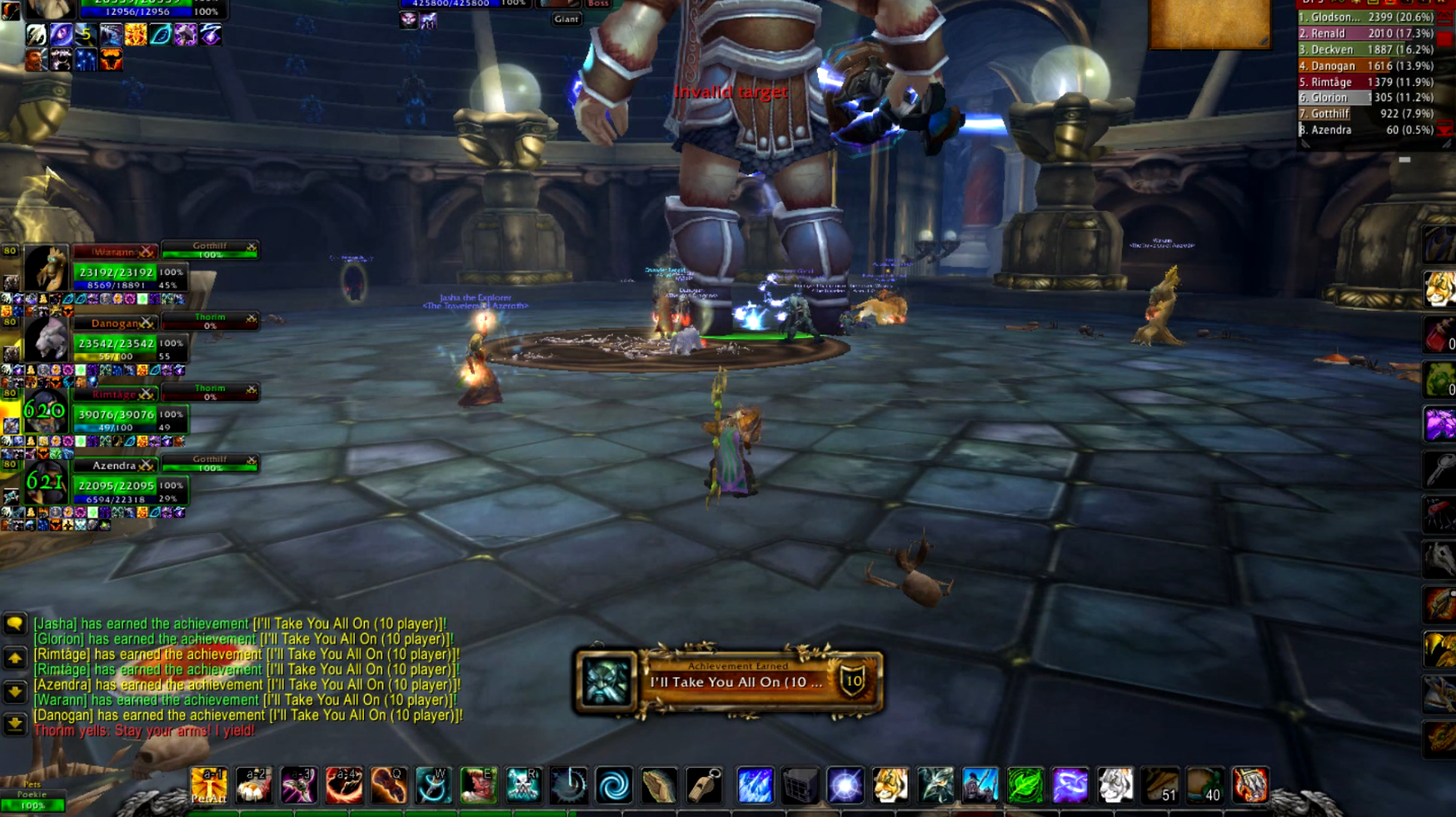
Now, for what I didn’t like: the public chat channels, especially Trade. It was a complete nightmare. Messages scrolled by at the speed of a fast-forwarded video. The main topics were raid recruitment, guild recruitment, and finding arena partners. The LookingForGroup channel was a similar “bacchanalia.” I put up with it for about ten days, then simply turned off the Trade channel. On Moonglade, the atmosphere was entirely different. Sure, gold sellers spammed there too, but in the Trade and General channels, people communicated more slowly and thoughtfully. There were trade ads and recruitment messages, but also general questions to the community, and sometimes interesting discussions would pop up. It was often genuinely interesting to read. On Gordunni, I only witnessed something like that once, when players were discussing football results, which made me laugh. Overall, the player base on the European server felt more well-rounded and seemed to have the desire and time for leisurely, intelligent conversations. Gordunni felt like a bustling business capital: ads everywhere, everyone hyper-focused on their “career,” making deals, and constantly in a rush.
Character nicknames were a whole other story. I saw some truly bizarre ones. However, Gordunni wasn’t unique in this; it was a widespread phenomenon on “RuWoW” (Russian WoW servers) from the very beginning. Someone with a great sense of humor even did a study on RuWoW character names back in the early days (you can find an archived version here).
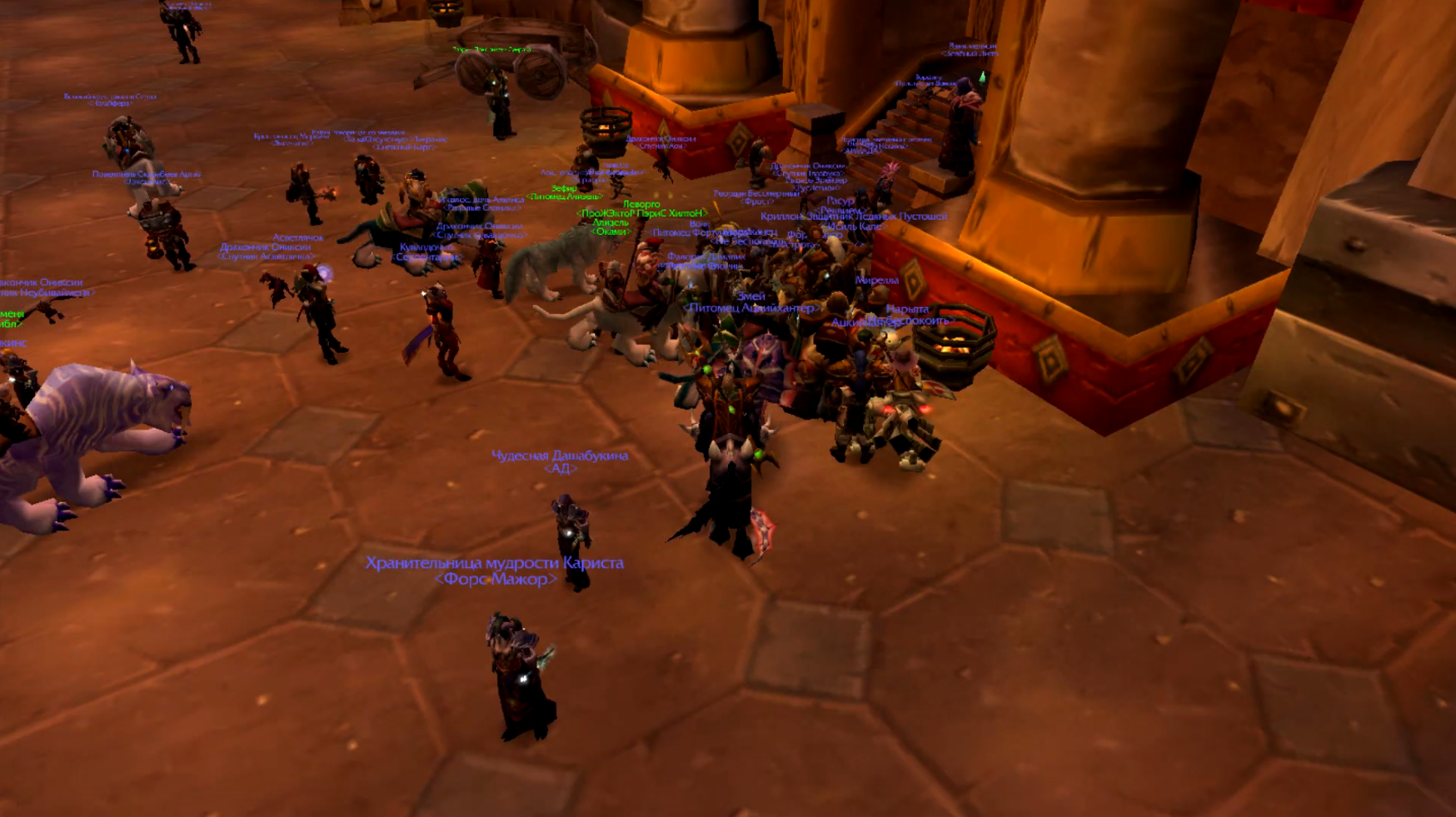
As that report highlighted, names with sexual, abusive, or idiotic themes were a serious problem. By spring 2010, the situation wasn’t as deplorable as it had been at the start of RuWoW. GMs were actively “cutting out” the worst of this nonsense, but it was an ongoing battle. As of March 28, 2010, a quick Armory search still revealed four characters named “Ass,” seven “Idiots,” six “Bitches,” nine “Morons,” three “Masturbators,” and seven “Orgasms.”
Despite these quirks, I was generally happy with my progress. In the first few weekly lockouts, I got a lot of gear – the pace of farming badges was leagues ahead of my old server. We cleared Trial of the Crusader (25-player) quickly, usually within an hour. We also ran Ulduar, but since these were often PUG-style groups, we usually only got as far as General Vezax. As it turned out, I only managed to finally see (and defeat) Yogg-Saron much later, in the summer, when our RL decided to organize achievement runs.
Patch 3.3: Icecrown Citadel & The Dungeon Finder
The release of Patch 3.3 was fast approaching, bringing with it the highly anticipated Icecrown Citadel raid.
The Lich King, formerly Prince Arthas, is undeniably one of the most central figures in Warcraft lore. The plots of Warcraft III: Reign of Chaos and its expansion, The Frozen Throne, revolve around him. For many players, WotLK felt like the logical continuation of the main storyline from the Warcraft RTS series. As some players often said, for them, WoW effectively “ended” with WotLK.
New content is always welcome, especially the final raid of an expansion. However, some changes have a more profound and lasting impact on the game than just new bosses and loot.
The introduction of the cross-server 5-player dungeon finder (LFG tool) and its automatic group assembly system was one of the most significant innovations of this era. Before Patch 3.3, putting together a group for low- or mid-level dungeons was a major hassle, especially on medium-to-low population servers. It could easily take an hour or two to find enough people, then another twenty minutes for everyone to travel to the instance entrance. Inevitably, someone would drop out, and the rest of the group would sit around “smoking bamboo” (doing nothing) while trying to find a replacement. It was a dreary business. After Patch 3.3.0, the situation changed radically. No more spamming the Trade channel or idling in the LFG channel; you simply selected an instance from a list and pressed a button. The system assembled the group automatically and, even better, teleported everyone directly to the dungeon. It even ported you back to your original location afterward.
Like any major innovation, player reactions were mixed. Many were thrilled to no longer spend ages searching for groups. On the other hand, the system sometimes “packed” groups with a jarring mix of skilled players and some who were downright weak, leading to many “vines” (complaints and rants) on the forums. The “elite” players from high-population, progression-focused servers like Gordunni and Soulflayer openly mocked the “casuals” from servers with more modest progress, and the casuals often responded in kind.
What’s certain is that Patch 3.3 became a watershed moment, after which distinct server communities began to blur. Previously, players would communicate within instances, add each other to friends lists, or even “ban” (ignore/blacklist) problematic individuals. Now, much of that social dynamic became less important. What difference did it make how someone treated you if you were likely to run an instance with them only once? Getting on someone’s “blacklist” was no longer a significant deterrent.
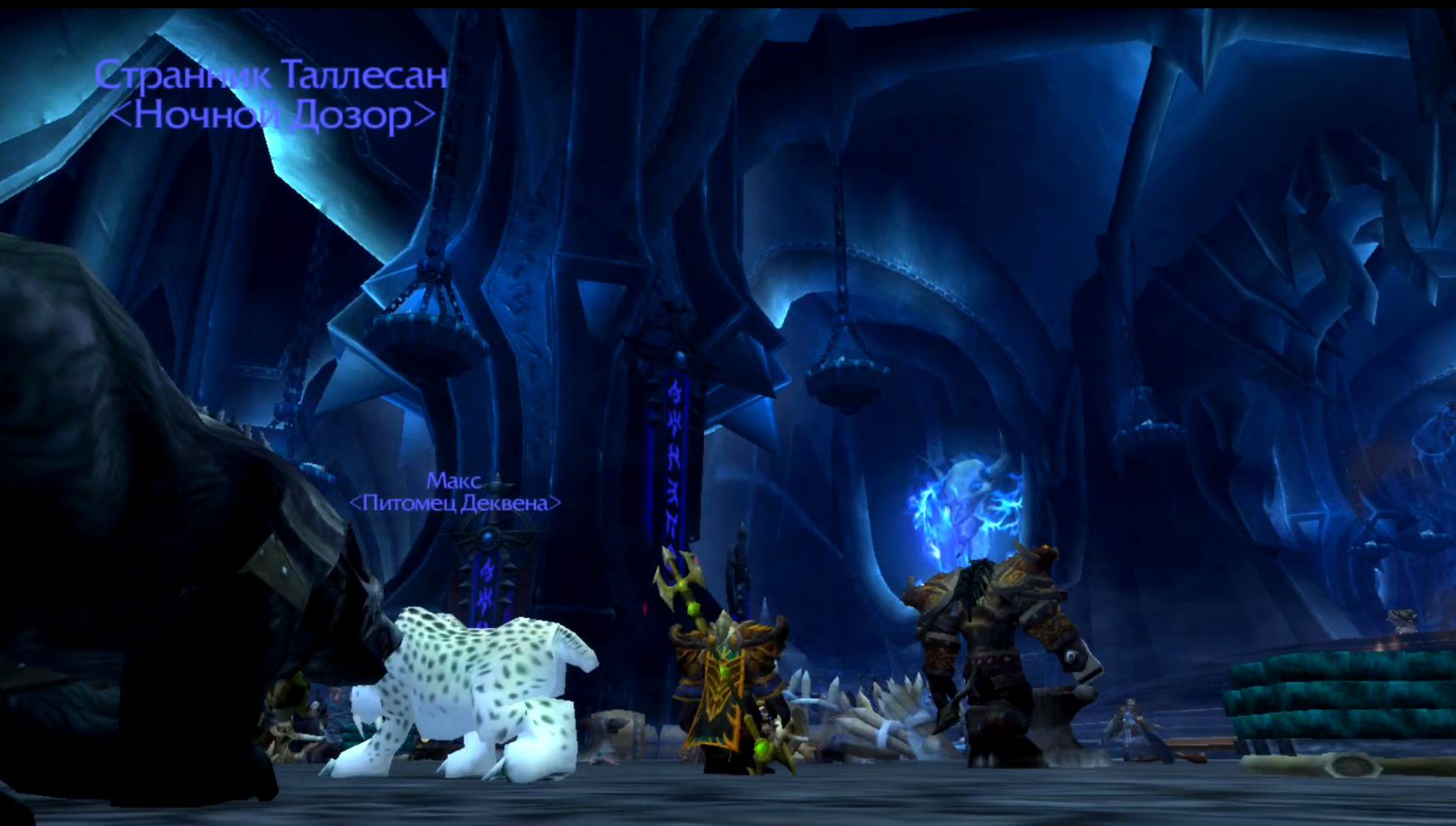
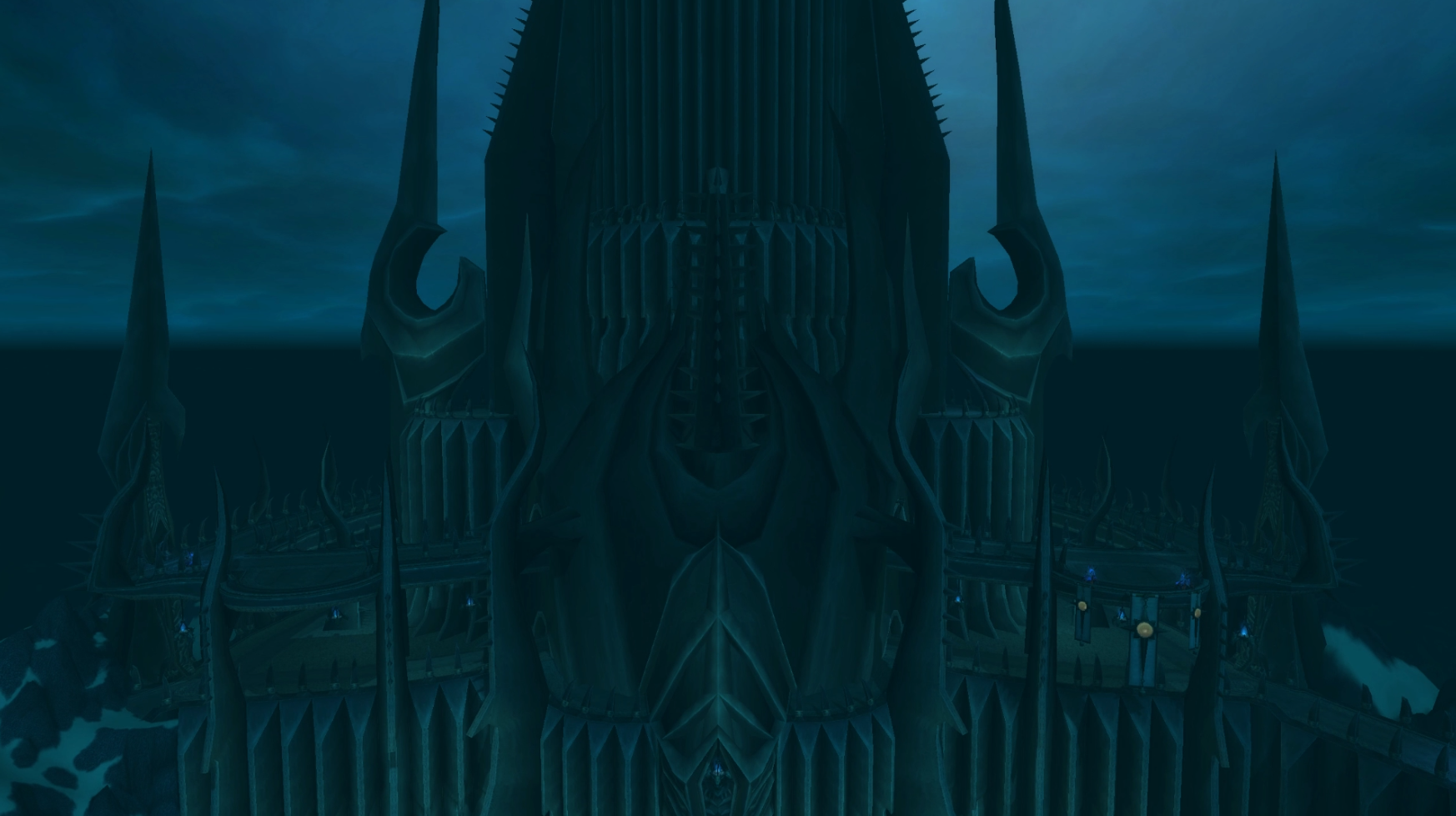
As for new instanced content, Patch 3.3 brought not only the long-awaited Icecrown Citadel (ICC) but also the Frozen Halls – three new 5-player dungeons: the Forge of Souls, the Pit of Saron, and the Halls of Reflection. These were significantly more challenging than the “old” 5-mans from patches 3.0-3.2. In these new dungeons, players quickly remembered what it felt like to wipe on trash mobs. The boss fights were original and engaging, especially the encounter with the Lich King in the Halls of Reflection – this was the first boss fight that primarily involved running away from him, rather than trying to kill him. The loot in the Frozen Halls was comparable in quality to drops from the 10-player Trial of the Crusader.
Icecrown Citadel itself became the logical embodiment of Blizzard’s “raiding for the masses” concept. As with Trial of the Crusader, Blizzard implemented two difficulty levels – “normal” and “heroic” (for both 10- and 25-player versions). Heroic difficulty was only unlocked after defeating the Lich King on normal. In principle, the normal difficulty was manageable for many casual guilds and players without extensive raiding experience, especially after Blizzard progressively introduced a zone-wide buff that reduced boss damage and health. Sindragosa and the Lich King himself were considered the truly serious challenges, particularly on their heroic versions.
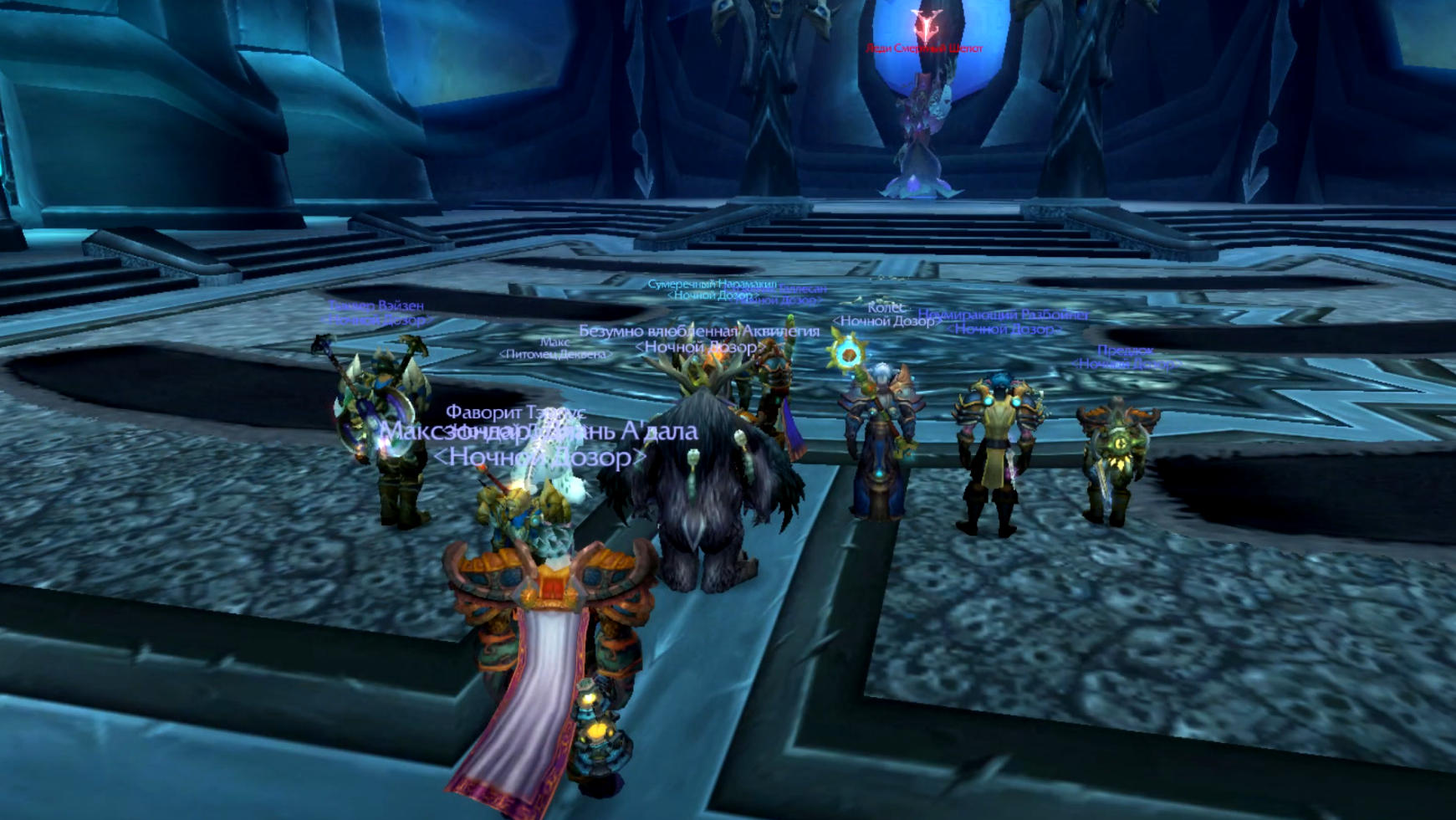
The wings of ICC were opened sequentially. Until January, only the first wing (containing four bosses) was available. The release pace then quickened, and hardcore players reached the Lich King by early February. The world-first Lich King kill was mired in controversy. In the 10-player version, Blood Legion secured a clean kill and a well-deserved achievement. In the 25-player race, Kungen and his guild Ensidia were initially credited with the world first, but they were banned a day later for using an exploit involving saronite bombs. They received a three-day ban, had their loot removed, and their achievement annulled. Kungen and Ensidia’s leading raiders erupted in angry letters to Blizzard, arguing that buggy raid encounters were “normal for pancakes” (a common, somewhat dismissive phrase meaning such things happen), but this didn’t change the outcome.
The Russian guild Exorsus also distinguished themselves in this progression race, achieving world firsts on Professor Putricide, Blood-Queen Lana’thel, and Sindragosa in ICC10 Heroic, and were the first to complete the “Glory of the Icecrown Raider (10-player)” achievement.
Some time after heroic modes were unlocked and the Lich King was defeated on heroic, Blizzard introduced a stacking zone-wide buff in ICC, increasing player damage and health. Each month, the buff increased by 5%, eventually reaching 30% by summer. In other words, ICC was eventually “nerfed to smithereens.” The first heroic Lich King kill was achieved by the Finnish guild Paragon, though they did it with the initial 5% buff active. Later, after fully farming him with the buff, they famously killed him again without any buff assistance.
Next: WoW Player Diary. Part 12. Casual player and top PvE realm