How I hit my first level cap and what happened on WotLK release.
Previous: WoW Player Diary. Part 5. Outland and pre-patch WoTLK
First Level Cap
My hunter finally reached the long-awaited level 70 while questing in Netherstorm. This milestone happened in early November, just two weeks before Wrath of the Lich King WotLK was released.
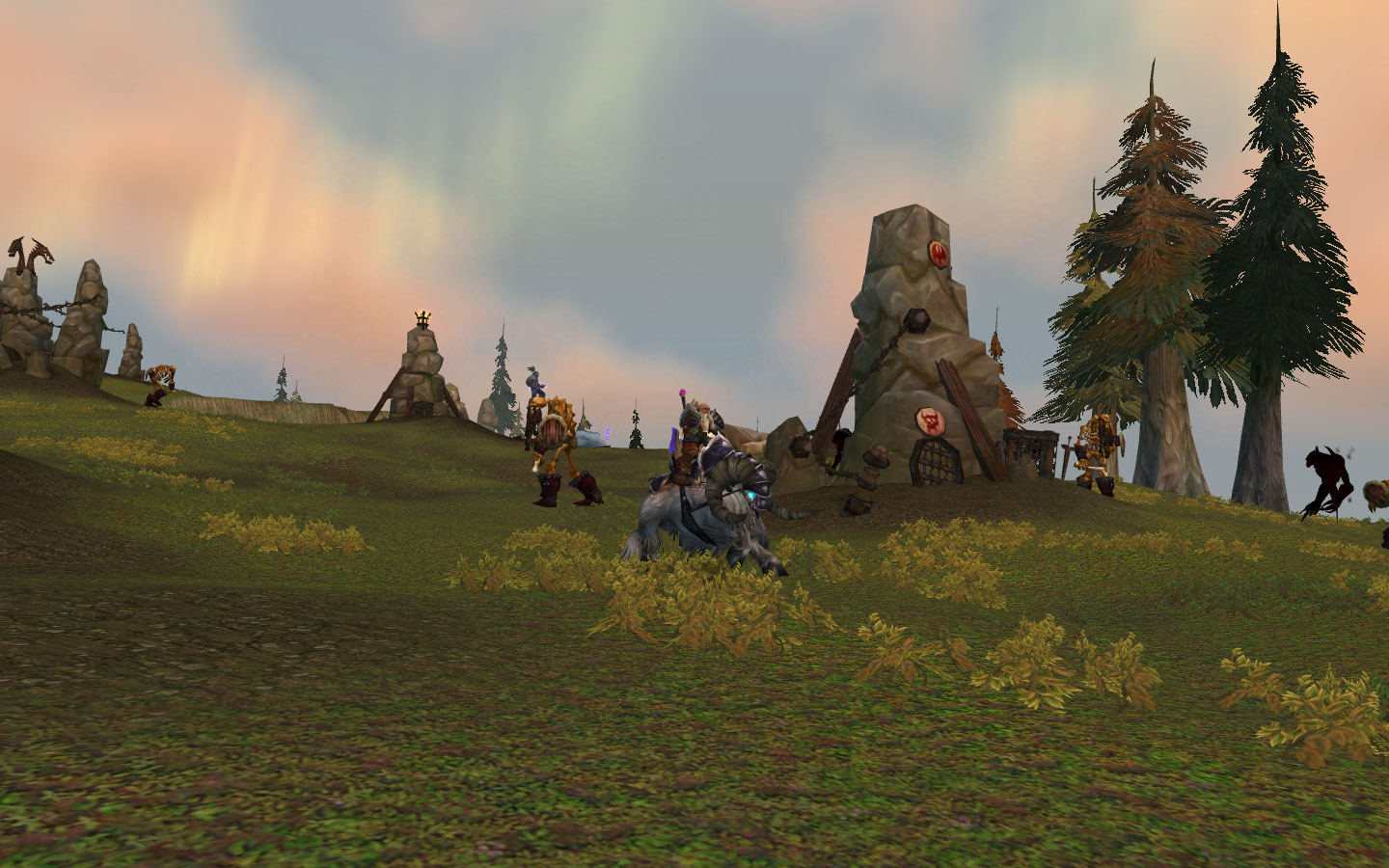
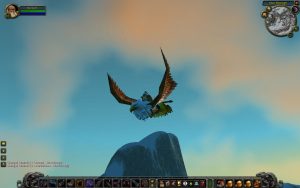
The very first thing I did after hitting the level cap was buy a flying mount. I purchased the White Gryphon from Wildhammer Stronghold in Shadowmoon Valley. Sure, it was only the “slow” 60% speed increase version – a real “sky slowpoke” – but it was my flying mount nonetheless! Finally, I could take to the skies whenever and wherever I wanted.
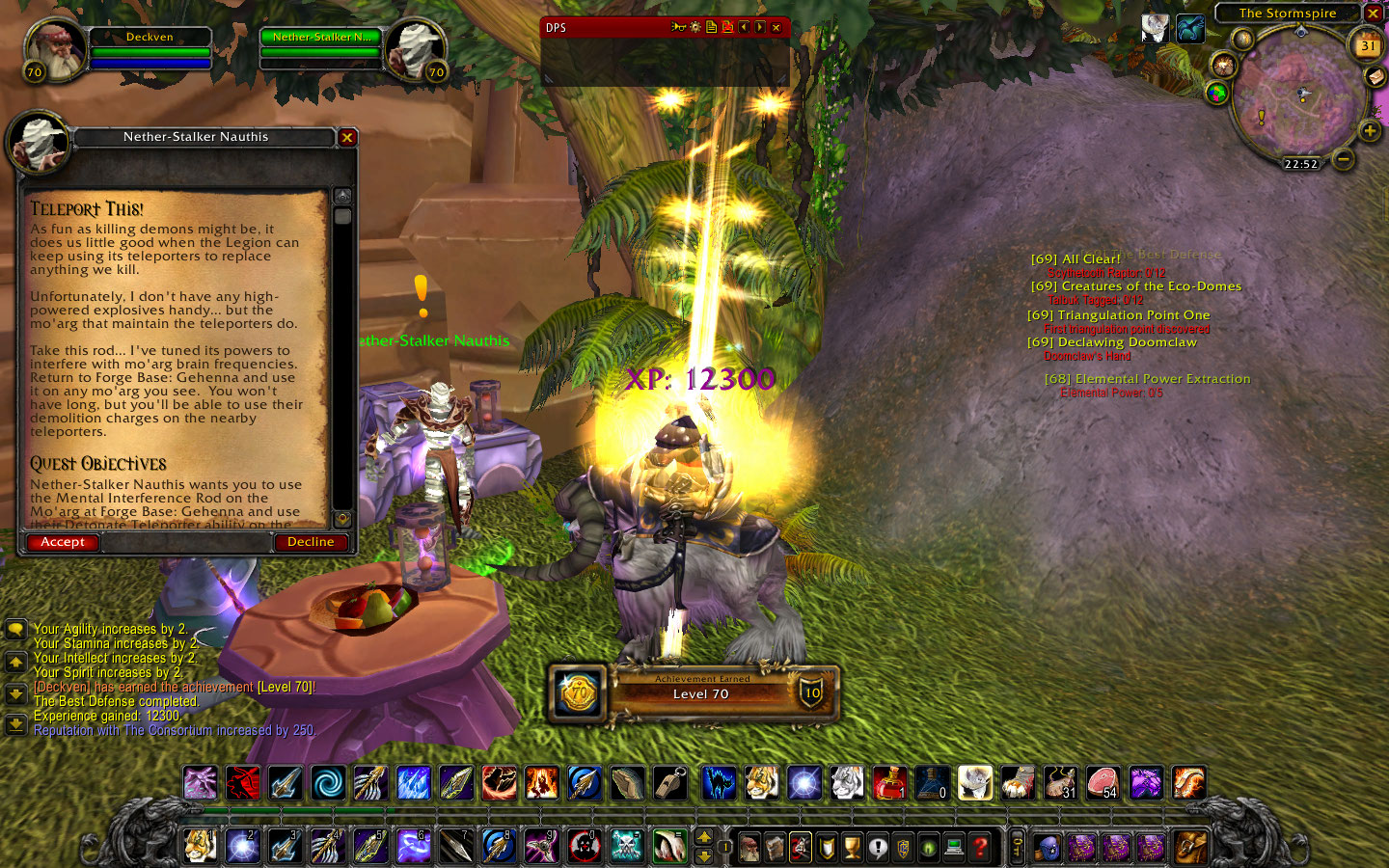
With the level cap achieved, my next goal was gearing up for the Karazhan raid. Even though it was The Burning Crusade’s (TBC) first raid, it remained popular throughout the expansion. Casual groups were still forming regularly, even near the end of TBC. Following my guildmates’ advice, I headed to the Isle of Quel’Danas, which was the game’s first dedicated daily quest hub.
Another source of starter gear came from the pre-WotLK Scourge Invasion event. Participating in these “zombie attacks” allowed me to farm badges, which could then be exchanged for entry-level epic items.
Of course, crafting was also an option, and that leads to a funny story. One day in Ironforge, I spotted another player wielding a gun with a truly striking design: the Gyro-balanced Khorium Destroyer. It looked like something out of science fiction – a weapon seemingly capable of making Burning Legion demons flee in terror. Naturally, I had to have it, so I immediately started farming the required materials.
I vividly remember battling fire elementals in Nagrand for Primal Fire – that spot, incidentally, remains one of the best farming locations even today. Khorium Ore was trickier. The bars were expensive on the Auction House, but as a miner, I kept an eye out for every vein I could find. By the time I hit 70, I had gathered everything I needed.
I found a gnome Engineer in Ironforge (not from my guild) to craft the gun for me. When the trade window closed and the gun was mine, the evening felt like a massive success. I was finally running around with a real epic purple weapon, not just some blue quest reward like the common “Gunblade.”
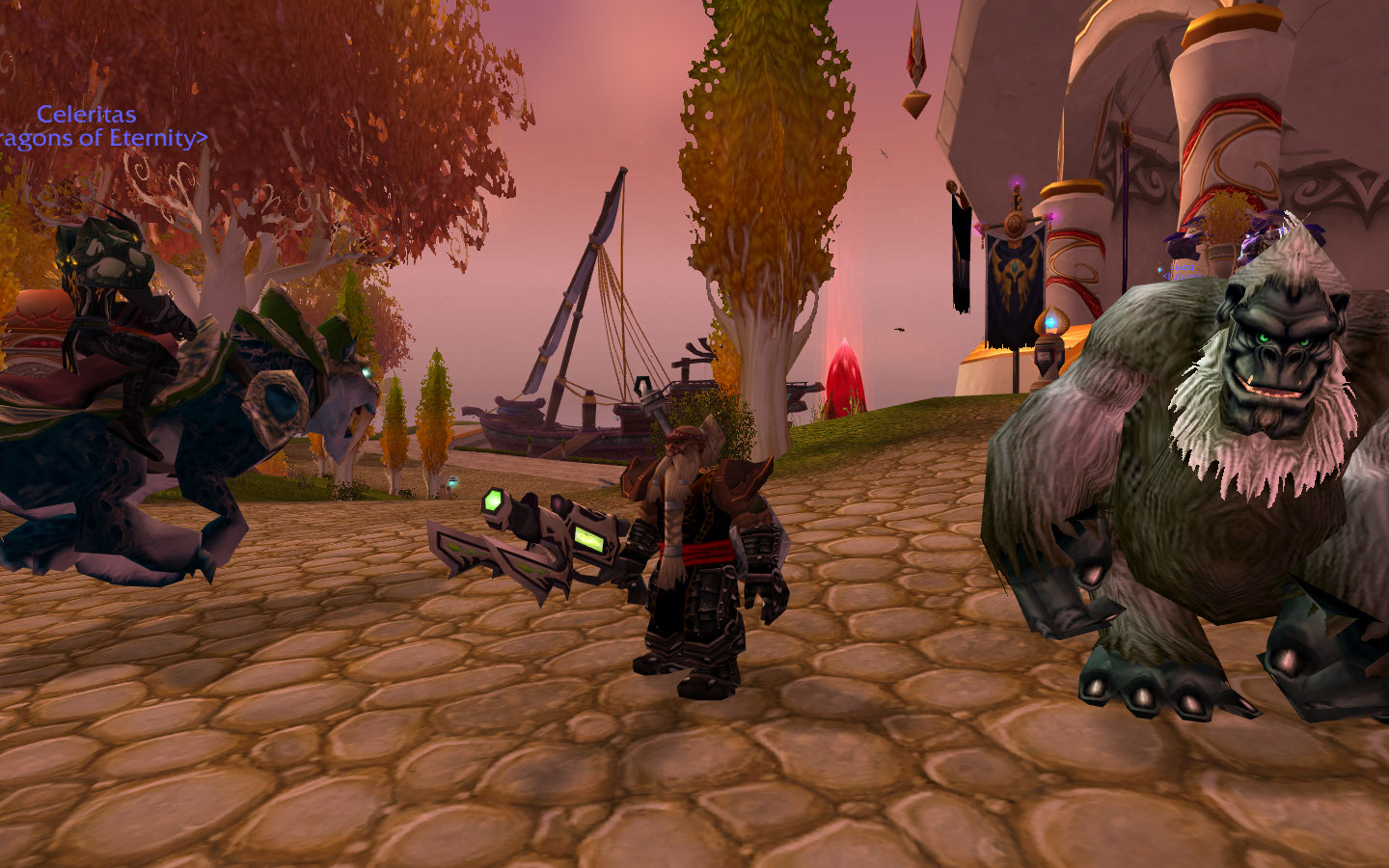
Here’s the catch, though: the gun’s stats weren’t perfectly optimized for a PvE Hunter. While it provided Agility, it boasted a lot more Stamina, making it arguably better suited for PvP or maybe even… a tank. I didn’t grasp these nuances back then. In a truly “noob” move, I even socketed a yellow gem for Intellect! To be fair, Mana was a crucial resource for Hunters in TBC, so the extra bit probably didn’t feel entirely wasted at the time, even if it wasn’t the ideal choice.
“Children of the Wrath”
Around January 2009, I came across an interesting article on an English-language World of Warcraft blog discussing the different “generations” of players the game had cultivated. The core idea was that in WoW’s four-year history (at that time), three distinct player generations had emerged, tied to the major eras: Classic WoW (often called ‘Vanilla’), The Burning Crusade (TBC), and the recently launched Wrath of the Lich King (WotLK).
The article highlighted how significantly the game had changed during this period. Class mechanics were overhauled, two new races (Blood Elves and Draenei) were introduced, and vast new continents (Outland and Northrend) along with smaller islands expanded the world. Players encountered new dungeons, mounts, storylines, and heroes. The level cap had been raised twice. Blizzard also introduced world events tied to seasonal holidays and major lore moments, like the opening of the Dark Portal or the Horde and Alliance expeditions to Northrend.
The author argued that players starting their Azeroth journey then (in early 2009) would experience a fundamentally different game compared to those who began 3-4 years prior. These newer players would likely never experience legendary Vanilla raids like Molten Core or Blackwing Lair during their prime; finding groups for such outdated content was already difficult, unless perhaps they joined a casual run organized by veteran players. They might skip over five-man dungeons that were becoming deserted even during the TBC era. They wouldn’t need to explore all of Outland, as reaching level 68 and heading to Northrend – the current hub of activity – could often be done by completing only a fraction of the TBC questing content.
These newcomers wouldn’t know the older systems: the original flight paths requiring manual connections between points, or the time when Stratholme could be tackled by a 10-player group. They might not even be aware certain classic dungeons existed, bypassed entirely as they rushed towards the Dark Portal upon hitting level 58.
When I shared my thoughts on the article with my guildmates, the veterans agreed. The game had changed. Some argued it was almost unrecognizable from its early days.
Reading this article made me reflect: which generation did I belong to? I began playing before WotLK launched, during a time when reaching ‘level 70’ was the ultimate goal and held significant weight. I bought my first riding mount at level 40 – back when it cost considerably more before the Patch 2.4.3 nerf. The achievement system didn’t exist yet, and honestly, no one seemed particularly bothered by its absence.
I hit level 70 myself just two weeks before WotLK’s release. So, technically, that placed me in the ‘TBC generation’. However, I never experienced TBC raids like Karazhan, Zul’Aman, or Sunwell Plateau when they were current progression content. Because of this, I couldn’t truly consider myself a full-fledged ‘child of TBC’. This left me feeling more aligned with the incoming wave: perhaps I was one of the first ‘Children of Wrath’.
Ship to the North
I pre-ordered my copy of Wrath of the Lich King from an online store in Kyiv. Back then, convenient digital downloads weren’t an option; pre-loading via the launcher simply didn’t exist. It was a different era: you ordered a physical disc, waited for delivery on release day, installed it from the drive, and only then could you finally play.
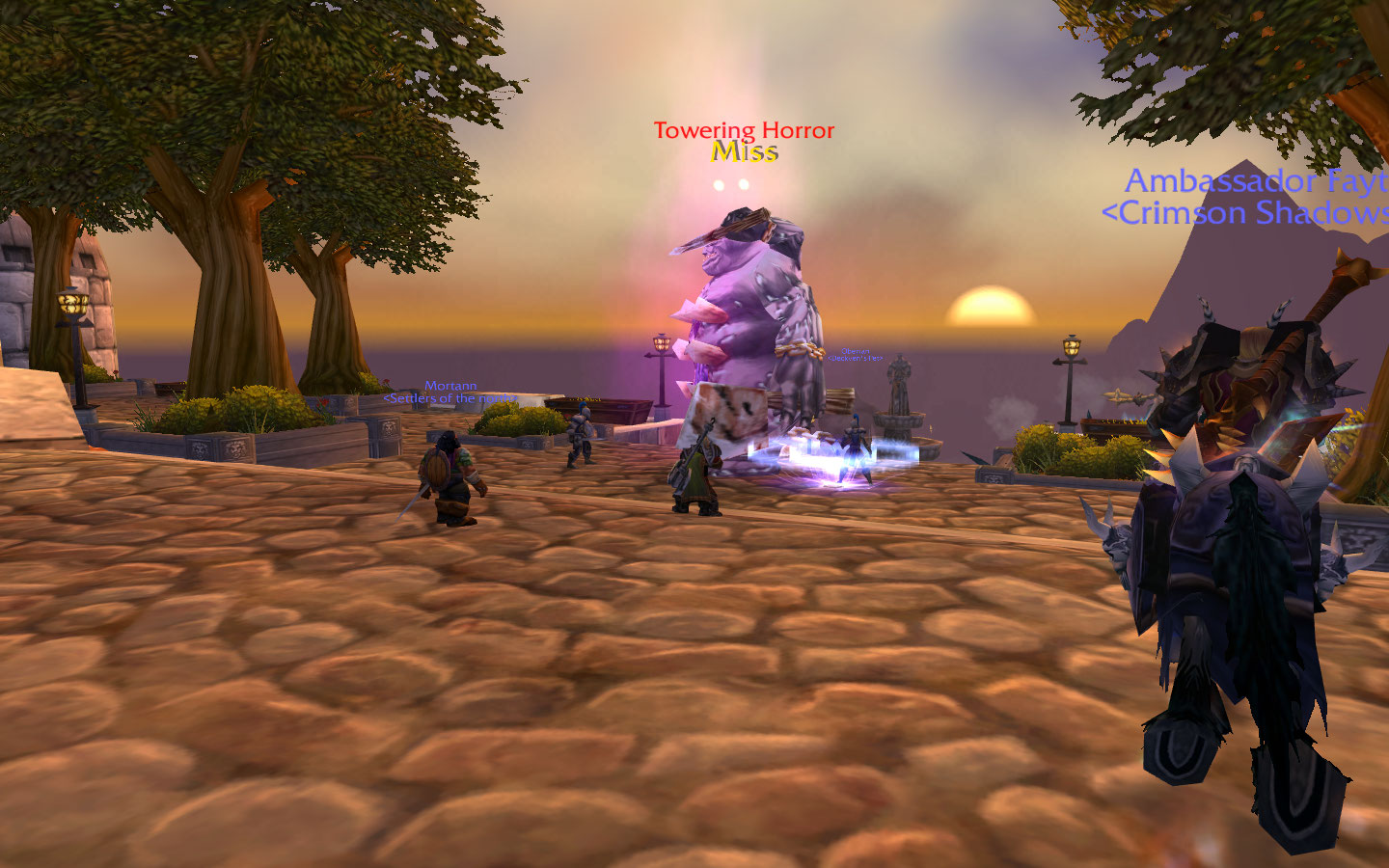
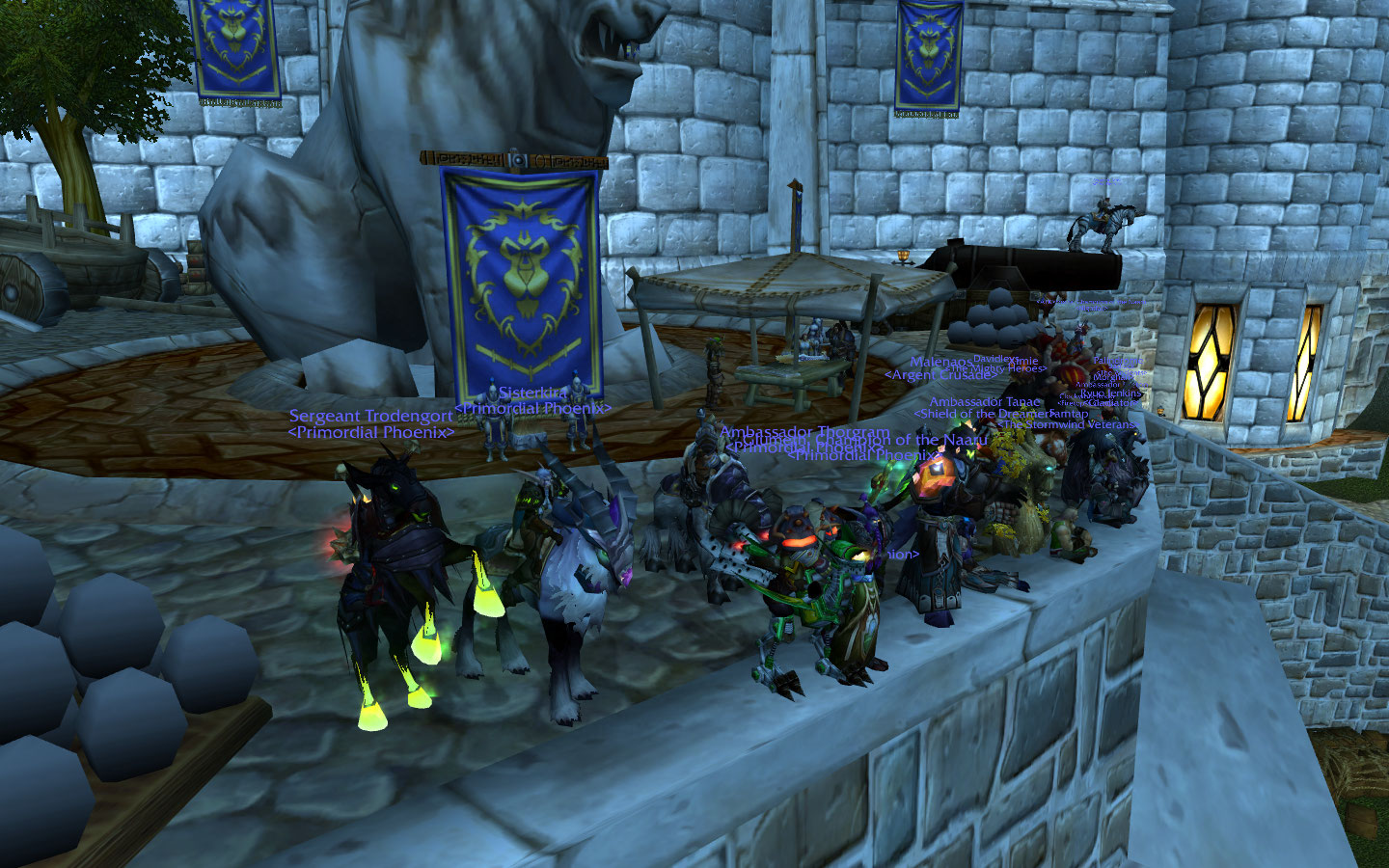
So, on the launch night of November 13th, 2008, I waited for my copy while others were already gathering in Stormwind harbor, watching the first ships departing for Northrend. General chat buzzed with activity: reports from players exploring the new continent, excitement about the newly visible post-70 experience bar, and mentions of leveling already happening in Howling Fjord and Borean Tundra.
My disc arrived at the office the next day, November 14th. Naturally, I didn’t install WoW there – I’d long since stopped putting games on work machines. I waited impatiently until evening, then installed WotLK on my home computer after dinner.
The first Northrend zone I ventured into was the Borean Tundra. Even though my server, Moonglade, wasn’t heavily populated, Borean Tundra still suffered from significant lag as the launch day wound down. This happened despite Blizzard wisely creating four separate entry points to Northrend (two for each faction, split between the two starting zones). It was a clear improvement over the chaotic Burning Crusade (TBC) launch, where the single Dark Portal entry point created a massive bottleneck, turning Hellfire Peninsula into a notorious “lag-fest” as both factions flooded through simultaneously.
For WotLK, Blizzard split the arrivals. Players could land separately in either Borean Tundra (via ship from Stormwind) or Howling Fjord (via ship from Menethil Harbor, back before the Cataclysm flooded it).
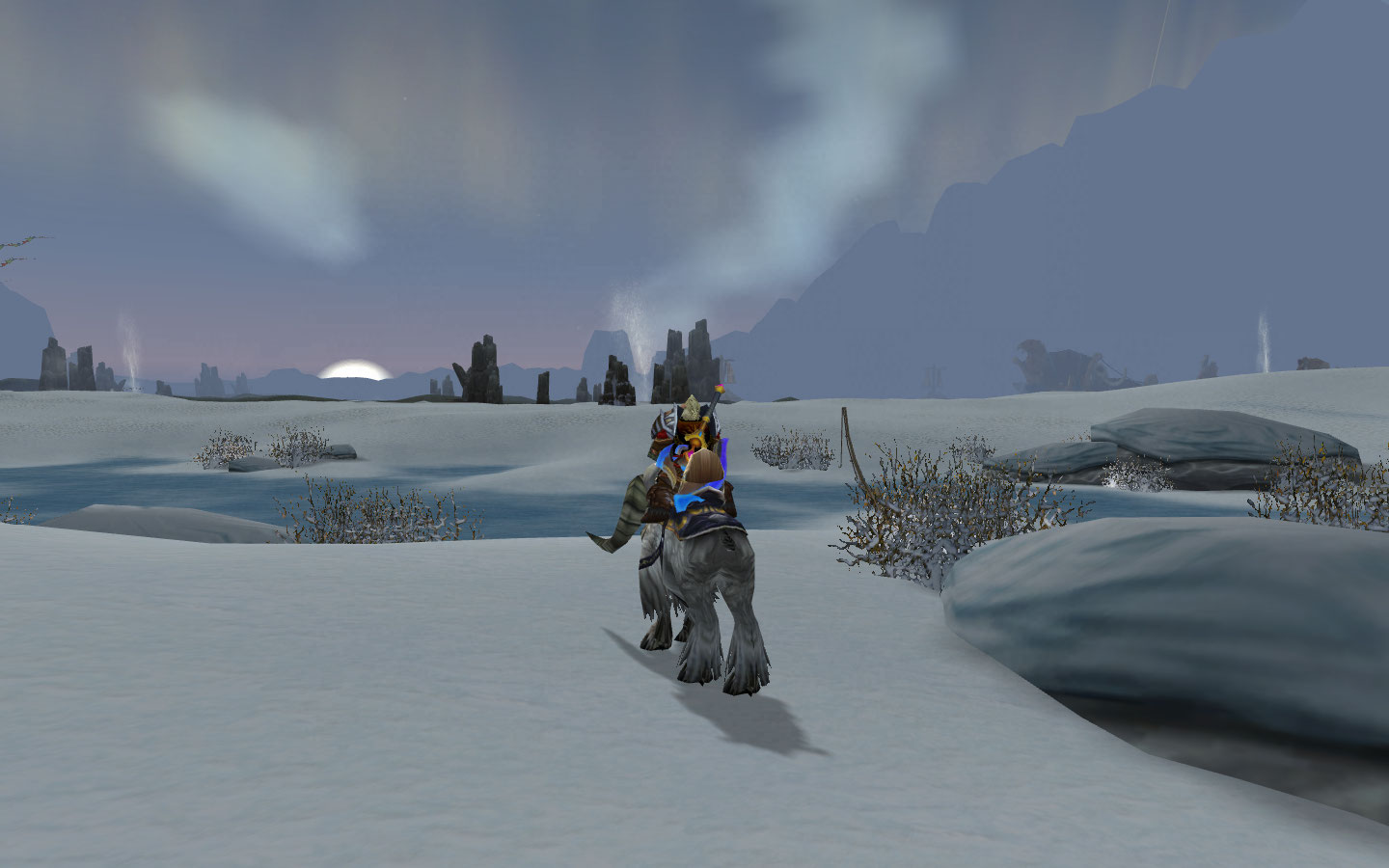
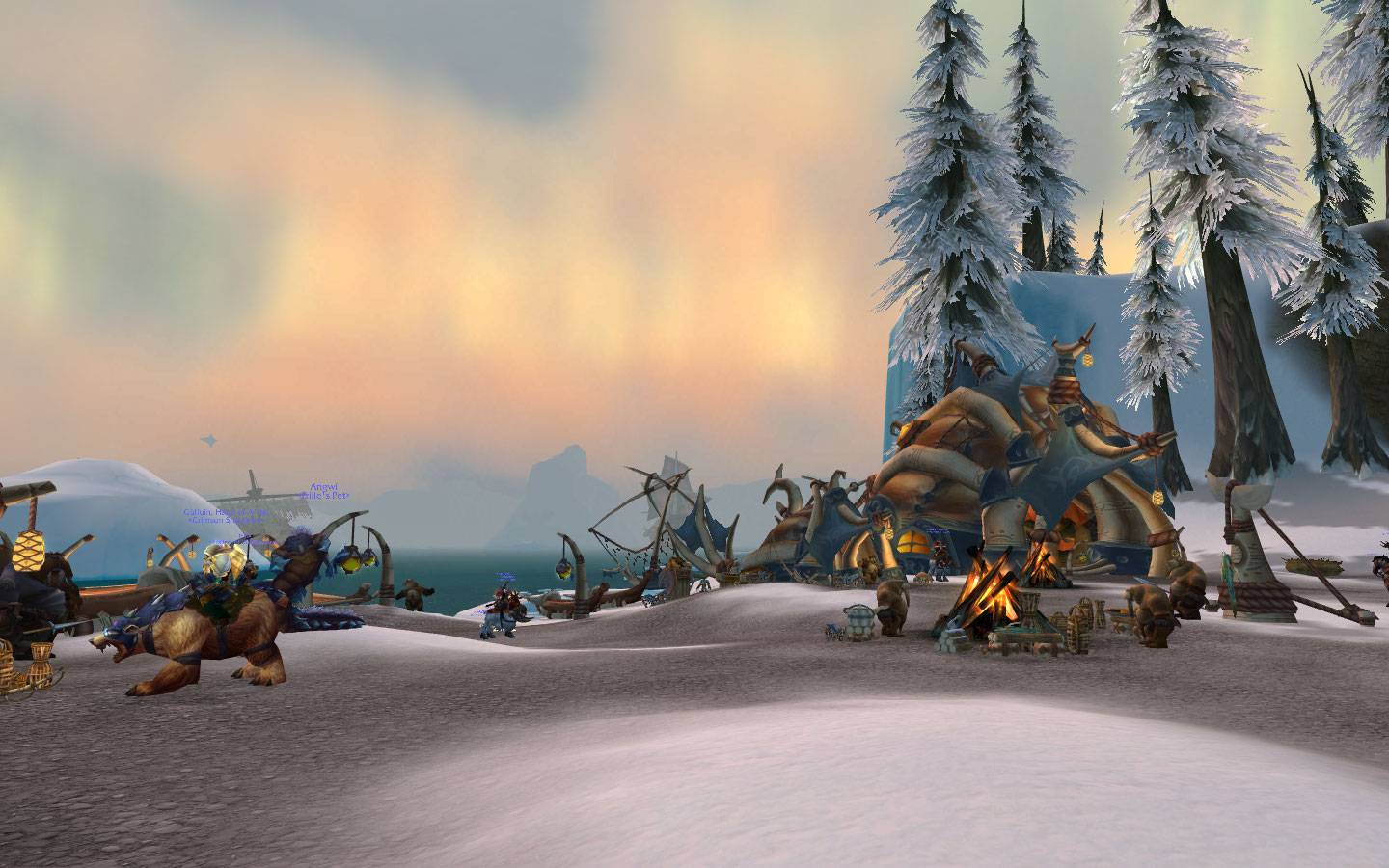
Speaking of starting zones, I always preferred Howling Fjord. Its atmosphere felt more captivating, with dense forests, towering cliffs, and Vrykul settlements clustered around the imposing Utgarde Keep. Borean Tundra had its own desolate charm, but I found it less appealing overall – more of a flat, sparsely vegetated wasteland. That said, both Northrend zones felt more grounded and aesthetically cohesive than many of Outland’s otherworldly landscapes.
The art and environmental design in WotLK were outstanding overall. While Vanilla WoW had its share of beautiful locations, I personally found TBC’s art direction somewhat inconsistent. WotLK, however, felt like a significant step forward. Perhaps grounding the expansion in a strong, Scandinavian-inspired theme helped create this more unified and appealing world, rather than trying to piece together disparate fantastical settings as Outland often did.
Questing also felt more engaging in WotLK, largely because the quests did a better job of weaving a coherent narrative. It sometimes felt like the developers were leading players by the hand, but the result was a clearer understanding of the unfolding story. However, a major technical innovation tied to this storytelling – phasing technology, which changed the world based on quest progress – had significant teething problems. These issues persisted for quite some time. Even as late as the Icecrown Citadel patch cycle, deep into the expansion, players in different phases often couldn’t see or interact with each other, causing frustration at summoning stones and elsewhere in the world.
Despite these technical hitches, other quality-of-life improvements were welcome. The introduction of Heirloom items was particularly notable. These account-bound pieces of gear scaled with your character’s level and could be sent to your alternate characters (‘alts’). Many also provided valuable experience bonuses, making leveling subsequent characters much smoother.
The 5ppl dungeon format largely followed the TBC model: relatively short, linear paths with 3-5 bosses, often grouped in convenient hubs. Ahn’kahet: The Old Kingdom was a notable exception, offering more scale and non-linearity. Generally, completing one of these dungeons at level 80 early in the expansion (Patch 3.0.x) took about an hour, sometimes less. This accessibility was another step towards catering to a broader player base.
However, not all of the developers’ decisions during this era were met with universal delight.
“Your content is a joke”
One of Blizzard’s most debated decisions during the Wrath of the Lich King (WotLK) era was the reintroduction of Naxxramas. Originally the pinnacle of raiding difficulty in Vanilla WoW, this Scourge-infested necropolis was conquered by only a tiny fraction of players back then. Ironically, WotLK repurposed this once-legendary challenge into one of the expansion’s entry-level raid instances.
The accessibility of the new Naxxramas became starkly clear just three days after WotLK’s launch. The newly formed guild ‘Twenty Fifth of November’ (a merger of elite guilds SK-Gaming and Nihilum) had already cleared all the initial raid content. This included the sprawling Naxxramas plus three shorter encounters: the Vault of Archavon, The Eye of Eternity, and The Obsidian Sanctum.
While the developers had stated that WotLK’s first raid tier would be approachable, the sheer speed of this world-first clear likely stunned even hardcore raiders. After all, defeating just the Four Horsemen encounter in the original Naxxramas took top guilds weeks of progression. Clearing the entire reworked instance, along with the other launch raids, in a mere three days – a timeframe that also included leveling characters to the new cap of 80 – was astonishing.
Of course, clear reasons existed for this rapid progress. The members of Twenty Fifth of November were geared in the best items from The Burning Crusade’s final raid (Sunwell Plateau) and possessed good knowledge of the original version of Naxxramas. Leveling speed was also a factor; the world’s first level 80 player hit the cap by the end of day one. Top players had beta access, allowing them to meticulously optimize their leveling routes.
This lightning-fast clear fueled the ongoing debate: Was Blizzard “casualizing” or over-simplifying the game with WotLK? I don’t fully agree with that perspective. Firstly, it wasn’t just simplification; it was an expansion of the difficulty spectrum, creating more accessible entry points for raiding. Secondly, this trend started long before WotLK. Vanilla WoW introduced 20-player raids (Zul’Gurub, Ruins of Ahn’Qiraj) as alternatives to the demanding 40-player instances. The Burning Crusade (TBC) continued this by shifting to 25/10-player formats, shortening dungeons, and adding the badge system for acquiring epics outside of raids.
In WotLK, this philosophy simply became more apparent. Yes, elite guilds blew through the initial content. But for countless other players, Naxxramas served as their first real taste of organized raiding – a crucial training ground. It might have felt easy for veterans in T6 gear, but it was arguably pitched correctly for the average player. Many belonged to casual guilds that, even in TBC, rarely ventured beyond Karazhan. I remember my own guild, Vindicators, having heated discussions about tackling Zul’Aman as late as August 2008. A guildmate even confided that our guild wasn’t equipped for tough raids and that truly progression-focused guilds were rare on our server.
My own journey reflected this more typical, slower pace. I didn’t set foot in Naxxramas until mid-April 2009, months after launch. Raid progression wasn’t my main focus; I leveled steadily but without rushing, averaging about a level per week. I quested through Borean Tundra, Howling Fjord, Dragonblight, Grizzly Hills, and Sholazar Basin, also spending time in Zul’Drak. Grizzly Hills was probably my favorite zone before hitting the level cap, with the Gundrak area of Zul’Drak a close second. Leveling was also naturally slower because Northrend flying wasn’t unlocked until level 77, and even then, I was cruising on my trusty, but slow, 60% speed White Gryphon.
Despite my slower leveling, I thoroughly enjoyed the five-player dungeons. I ran Utgarde Keep, one of the first available, on my second evening in Northrend. As I mentioned, I loved the expansion’s Scandinavian theme, brilliantly executed by the designers there. The troll dungeons, Drak’Tharon Keep and Gundrak, were also excellently crafted. A particularly memorable instance was The Culling of Stratholme in the Caverns of Time. It let us participate directly in one of Warcraft’s darkest and most pivotal moments: the event that sealed Arthas Menethil’s tragic fate and set him on the path to becoming the Lich King.
Next: WoW Player Diary. Part 7. Leveling in Northrend and changing a guild