Playing on the Gordunni server from November 2009 to February 2010 was a honeymoon period. After that, the downsides started creeping in, and the longer I played, the more of them I found. In the end, it all came down to performance and ratings.
Previous: WoW Player Diary. Part 12. Casual player and top PvE realm
Raiding in WoW is one of the core game systems; I would even say it’s one of the main ones. The most important action in the game revolves around raids. They serve as the primary indicator of a character’s progress at the level cap, and generally, the biggest dramas in WoW are all about raiding.
As I said before, I moved to Gordunni because I wanted more serious raid progression and a more engaging experience with that content. At first, it really delivered. But, as they say, things weren’t quite as they seemed.
I wrote a post back in October 2009 about casual raiding, where I summed up my experience in the “Travelers of Azeroth” guild on the Moonglade-EU server. It was a typical casual guild that wasn’t pushing for progress but was, as they say, playing “for fun.” After four months of playing in my new guild, the “Night Watch,” I finally understood what it meant to be a casual on a progression server like Gordunni. In an old article about WoW raiding, a writer mentioned that it’s hard to get into a good group without connections. Renald, the player who invited me to Travelers of Azeroth, said almost the same thing. He had spent a couple of months on a high-progress server before returning to the casual life on Moonglade. Honestly, if it weren’t for my friend Dollmaster, I probably wouldn’t have been accepted into the Night Watch. I saw the applications from other candidates on the guild forum and how they were discussed. The feedback was fair, but harsh. Sure, I wasn’t making obvious mistakes like socketing Intellect gems in my gear, but I didn’t have much experience either.
Of course, everything I’m describing reflects the realities of over a decade ago, before LFR, flexible raids, or connected realms existed. Nevertheless, some things in this game don’t change. So, here are the pros and cons of raiding on a progression server as it was back then.
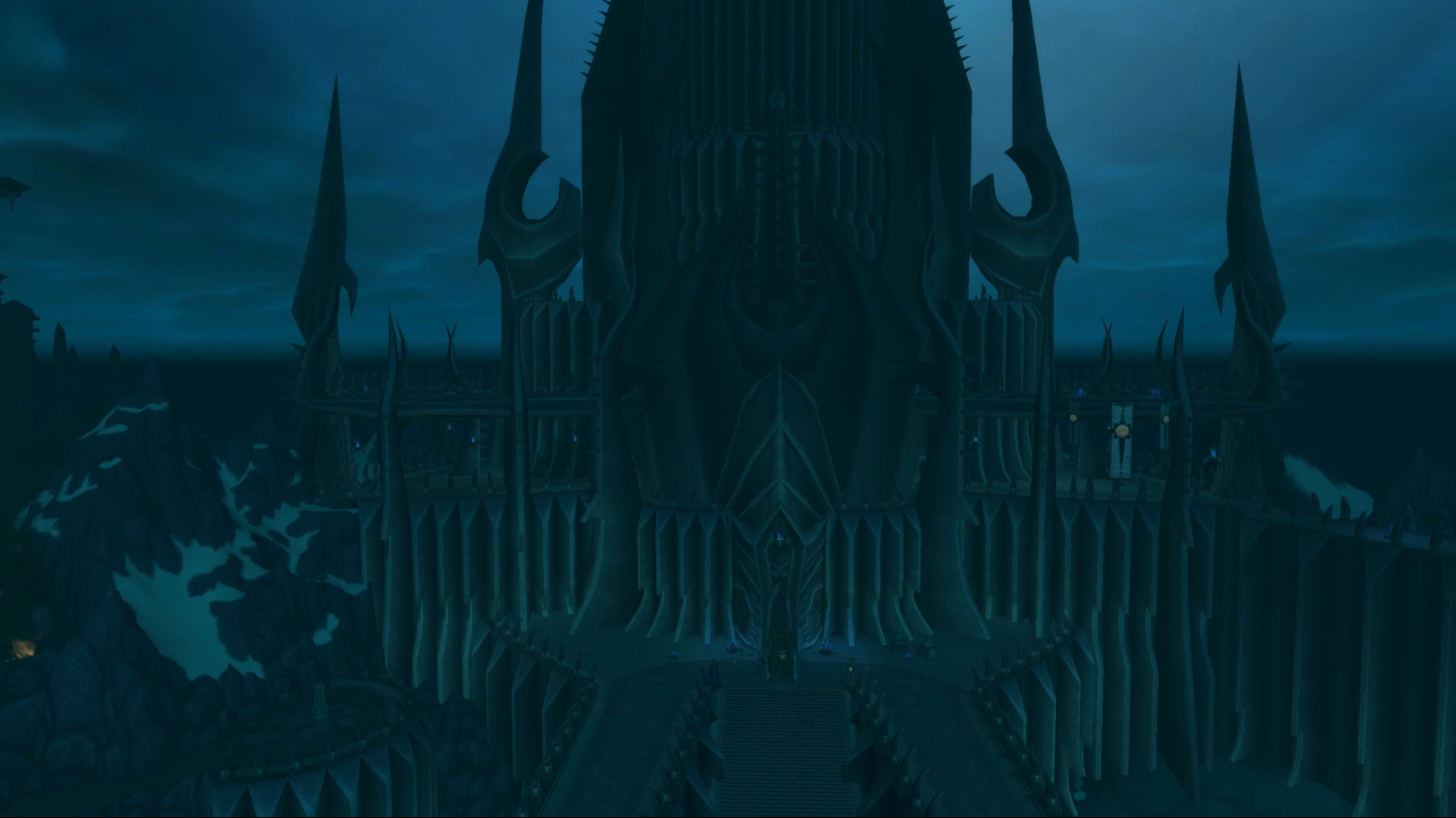
One of the clear advantages was seeing content when it was still relevant. Icecrown Citadel was the first raid I entered on opening day, not two months later. Another benefit was the efficiency of learning and farming. On a top server, nobody spent an entire evening wiping on the Faction Champions in the Trial of the Crusader, getting frustrated, and then arguing about it on the guild forum. We rushed through ToC-10 in half an hour and the first five bosses of ICC-10 in a little over an hour. This meant my limited free time was used much more effectively than in a casual guild.
The second plus was the experience I gained. It’s better to participate in a fight once than to watch a YouTube video ten times. To truly understand an encounter, you need to fight the boss four or five times. It’s even better if there are experienced players in the guild willing to offer advice instead of just criticizing a bad build. Talking with skilled players is far more useful than reading online guides. I gained much more experience in terms of improving my own gameplay, understanding boss mechanics, and figuring out my role in the fights.
Now about downsides.
While the standard content was farmed without any issues, on heroic difficulty, things were a different story, especially while learning the encounters. It was wipes, wipes, and more wipes. In a casual guild, wiping on difficult bosses didn’t cause much irritation. But in a progression guild, it created tension, which led to the raid leader yelling in Ventrilo, penalties, and raids running long. I remember trying to down Hodir—we wiped on him all evening, but strangely, there was no real tension. After the fourth or fifth try, everyone understood what to do and was practicing their roles. When the raid time was up, the raid leader called it for the night. Our best attempt had him at around 40% health. I’m sure if we had played for a couple more hours, we would have killed him. But we were casuals; we didn’t need the progress, and a healthy night’s sleep was more important than ten achievement points and some purple pixels in our bags. In a progression guild, you wipe until you succeed or collapse. The stress level is much higher, and the attitude toward progress is completely different. After some of those raid nights, I asked myself—why the hell do I need this? I have enough stress in real life, so why should I seek it out in a game?
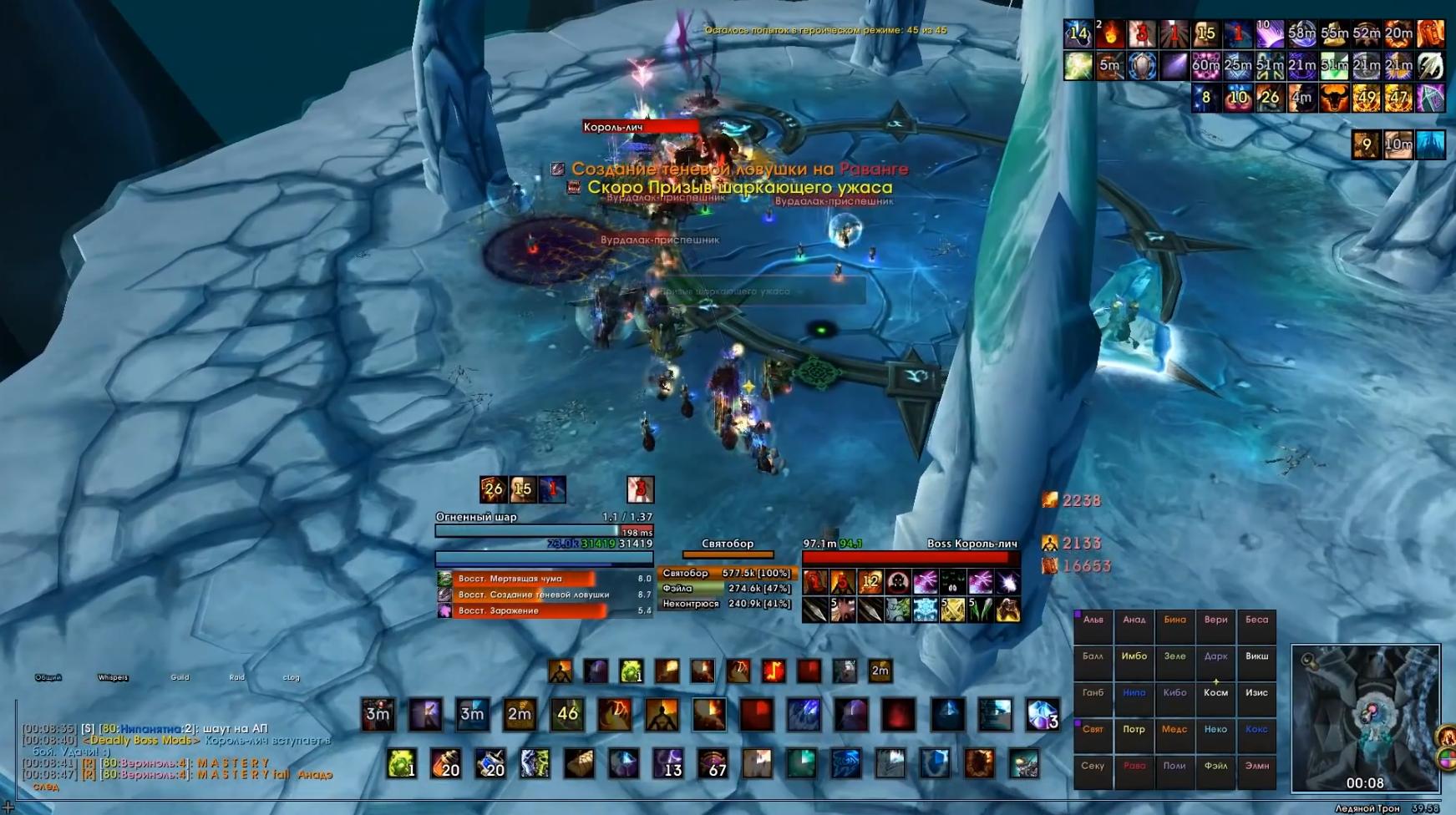
The skill level on top servers is much higher. The issue wasn’t just the skill level, but the attitude of the top-tier players who pull god-tier DPS and look down on anyone who can’t keep up. Even a small difference in damage or healing was enough to get you called out for being at the bottom of the meters.
The feeling of being left behind creeps up on you. Hearing people in chat discussing a boss kill you haven’t even attempted yet will make you feel uncomfortable. And then there’s the habit of living by the cooldown. You see trade chat spammed with messages like, “LFM ICC-10, 10+ exp, ignore crabs with only Siege experience.” You feel like you don’t have time; you’re constantly farming heroics, looking for pugs for the Vault of Archavon, and burning your cooldowns with randoms just to get another piece of gear that will add a few points to your GearScore. Real endgame raiding is like surfing—you have to be on the crest of the wave or somewhere close, otherwise you won’t even get a spot in a pug for your “crappy” gear. This social pressure is another hook that makes you log in regularly, run the same boring Utgarde Pinnacle or The Nexus until you’re sick of it, and look for a group for the weekly raid where once-formidable bosses are now torn to pieces in minutes. And for what? Mostly for Emblems of Frost. There’s no longer any pleasure in the victory.
If I had to summarize this whole wall of text, the picture that emerges is simple: I was “a stranger among my own.” I just didn’t fit into that environment. I was clearly at a lower skill level, and I didn’t have the time to farm for six or seven hours a day to gear up several alts. The further I went, the stronger the feeling that I was in the wrong place became. The situation got worse in March when Dollmaster had to deal with personal problems and stopped leading his static, handing over guild management to someone else.
During the month that Dollmaster was gone, I got by mainly with pug groups, managing to get into the main guild raid only once because attendance was low that evening.
In the end, I left the Night’s Watch. No, it wasn’t because I was fed up with comments about my gear or DPS. The people in the guild were mostly polite, and I’m thankful they took me on raids and helped me with advice. But I wasn’t one of them and, frankly, I never intended to be.
I didn’t want to join a Russian-speaking equivalent of my old casual guild. The memory of wiping on the Faction Champions was still fresh, and I knew exactly what to expect. Besides, there weren’t many truly casual guilds on Gordunni anyway.
In April, Dollmaster returned to the game, but not as the guild master of Night’s Watch. He started putting together a new guild and led a static for ICC-10. The static wasn’t exactly top-tier. Typically, a core of six or seven of us would gather around 8 PM, and then Doll would spend a long, tedious time looking for a few more players to fill the remaining slots. Once we had our pugs, we’d head into ICC and fight the bosses with varying degrees of success.
It should also be noted that starting in March 2010, a buff was added to ICC that strengthened players. Initially, the damage and healing buff was 5%, a month later it was 10%, and by the end of May, it reached 20%. By the way, it was only after this buff that the Finnish guild Paragon finally defeated the Lich King on 25-man Heroic. The fully geared Paragon managed to defeat him without the buff at the end of July.
However, for the pugs going after the Lich King, even the buff wasn’t enough, and our static continued to wipe on him until the beginning of June. The static did eventually manage to kill him in the 10-man version, but it happened without me. I ended up leaving the static because raiding heroics didn’t appeal to me at all, and there were some personal reasons I didn’t want to play with that team anymore.
By the summer of 2010, I was left without a guild, without a static, and with a fair amount of disappointment in the endgame on a progression server and in my own abilities as a raider.
What the summer of 2010 was like will be told in the next installment, along with my experience in the Cataclysm beta test.
WoW Player Diary. Part 14. Celestial steed and Cataclysm beta