The Dark Portal is one of Azeroth’s most iconic spots. It’s the gateway the orcs used to invade from Draenor, starting the First War and changing the history of the world. Because I remembered the stories from the original Warcraft games, I couldn’t just rush through its pulsing green arch when I arrived in the Blasted Lands. After hitting level 58 in the Plaguelands in late July, I immediately went straight there.
Previous: WoW Player Diary. Part 4. Running 5ppl instances
Through the Dark Portal
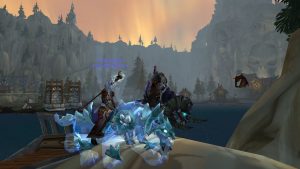
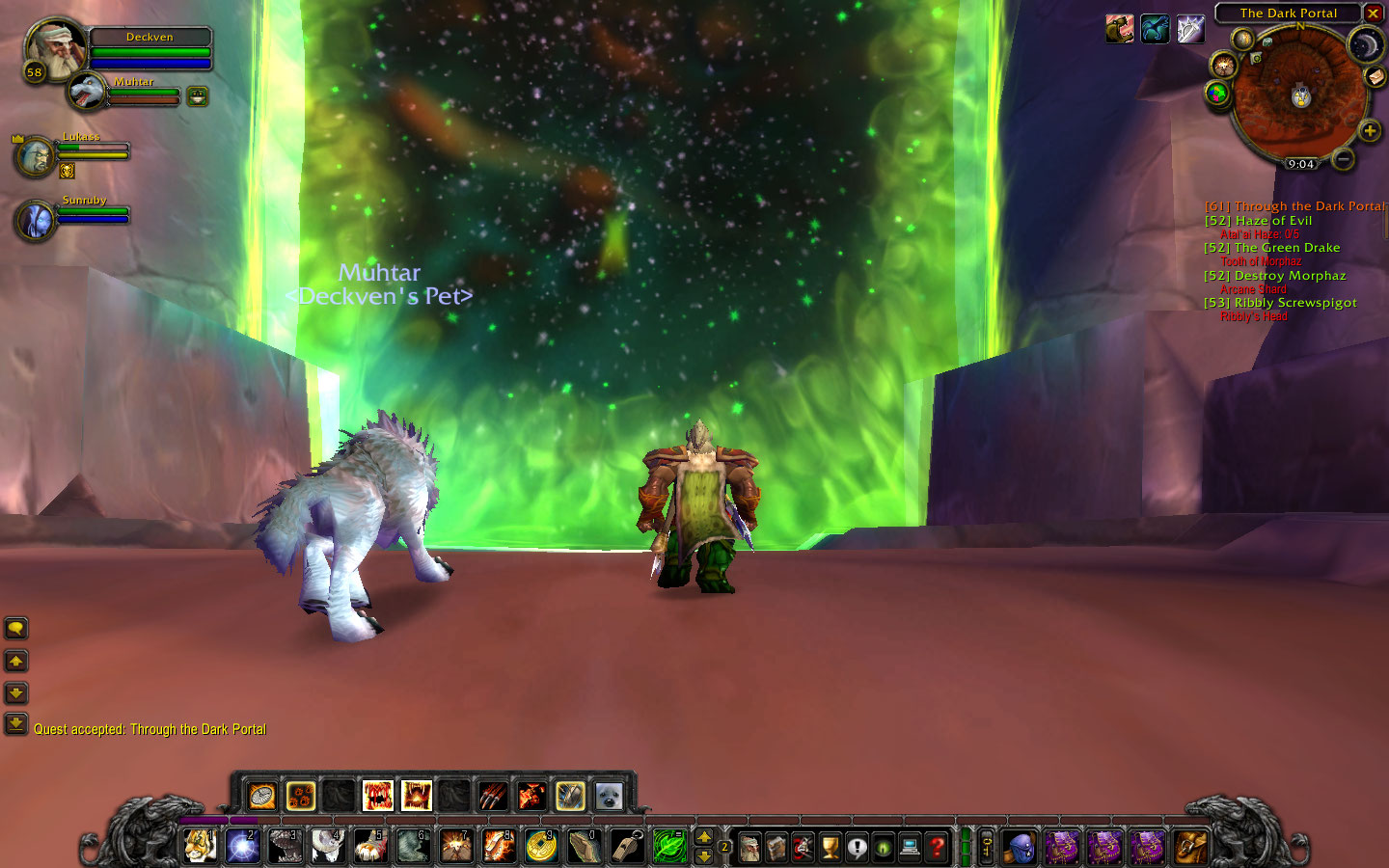
Flying wasn’t yet possible in the Old World, so, dismounting from my trusty ram, I slowly walked toward the Dark Portal, taking a few screenshots against its backdrop. It might sound silly, but passing through that Portal felt like the first page of a second chapter. Of course, I’d already read about Hellfire Peninsula, Shattrath, and the Black Temple. What’s more, back in March, I’d happened to see a player with the “Azzinoths” on their back, and seeing groups advertised for Karazhan in the city chat was a regular occurrence.
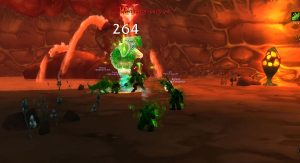
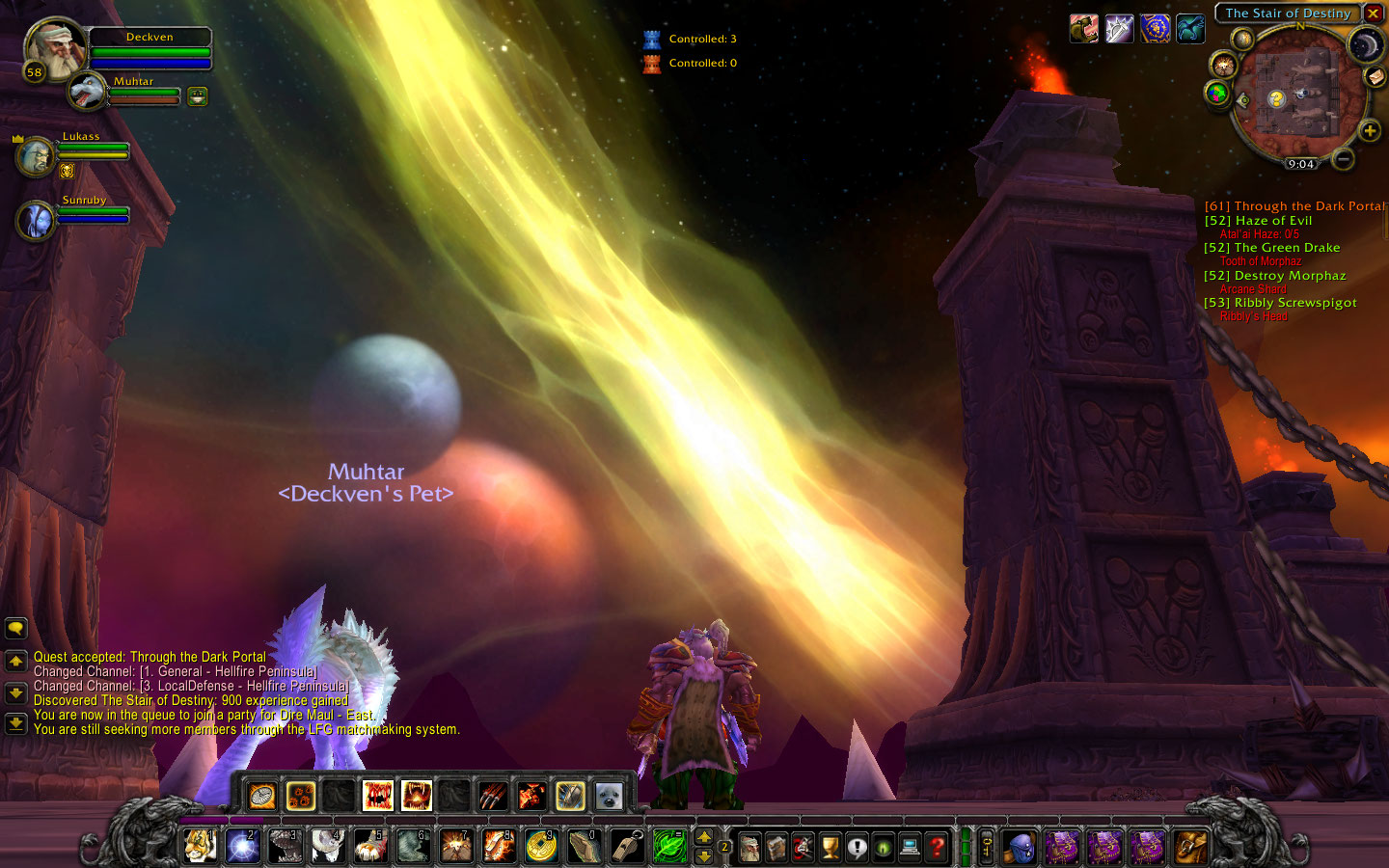
On the other side, I found a landscape of red mountains and plains teeming with Burning Legion demons. I immediately headed to Shattrath, Outland’s main city. There, I stared at level 70 players on flying mounts—something I’d never seen before. After that, I got back to the familiar routine of questing and killing local monsters. Disappointingly, the quests in Outland felt much like the old ones: mostly “kill this” or “fetch that,” with only occasional story quests.
The good news was that experience came very fast, at least until level 60. At that point, I bought a faster epic mount, which was much better than my level 40 one. This extra speed really helped when running through dangerous areas. After level 60, though, leveling felt like a real grind. While I liked most of the original game world, Outland felt completely different. Only the Nagrand zone really clicked with me. Everything else seemed odd – the zone designs, the colors, and even the stories. The expansion felt strange with its spaceships, a weird mix of tech and magic, the crashed Exodar ship, the Burning Legion using both advanced and simple weapons, and scantily clad Shivarras. To top it all off, there was a major story change (a retcon): the history of the evil Eredar leaders was rewritten, which is how the Alliance got the Draenei race.
In principle, it turned out more or less harmonious, but the almost classic “high fantasy” with a touch of Warcraft steampunk was now thickly mixed with something closer to science fiction. I’ll admit, I didn’t delve too deeply into the plot at the time. Firstly, it was rather convoluted. Much like the quests in the Old World, they provided pieces of a puzzle that you had to work hard to put together.
Secondly, there were only three months left before the release of the Wrath of the Lich King expansion, and in that time, I wanted to reach the level cap and get to the current Karazhan. At the same time, leveling after level 60 became considerably slower. With my limited gaming time, I could only manage one or maybe two levels a week. In other words, I barely had enough time.
Waiting for the Lich King
In the summer of 2008, hardcore players were deeply engaged in exploring Sunwell, while those of us who were more casual players—or those who weren’t on vacation—were either banging our heads against Zul’Aman or leveling up our alts. But both groups were united in waiting for the same thing: the release of the second expansion for World of Warcraft, Wrath of the Lich King. The beta test was in full swing, and the internet was overflowing with screenshots of the icy landscapes of Northrend. More and more information about the new features and changes was trickling out from official sources.
Perhaps the most talked-about topic of that period was the achievement system. Yes, those same notorious “achievements” that are now so integral to World of Warcraft. Yes, that’s the way it is now, but back then the idea of “complete a task – get ten points” was largely met with a bewildered “lol?” reaction. The developers also mentioned that they would be adding titles and mounts. “And epics?” the community inquired. “No, for epics, you have to raid,” was the reply. “Okay,” said the community, and then collectively held its breath.
As time has proven, Blizzard knew exactly what they were doing. One of the key aspects of any MMO is social status, which is primarily determined by how good you are at the game. But that success needs to be measurable and visible to others. Back in the days of vanilla and The Burning Crusade, having raid sets and legendary items was the main indicator of success. The achievement system streamlined and broadened these signs of status. Most importantly, it gave players clear goals that weren’t solely tied to raid progression. In my opinion, that was a key factor in the “casualization” of the game.
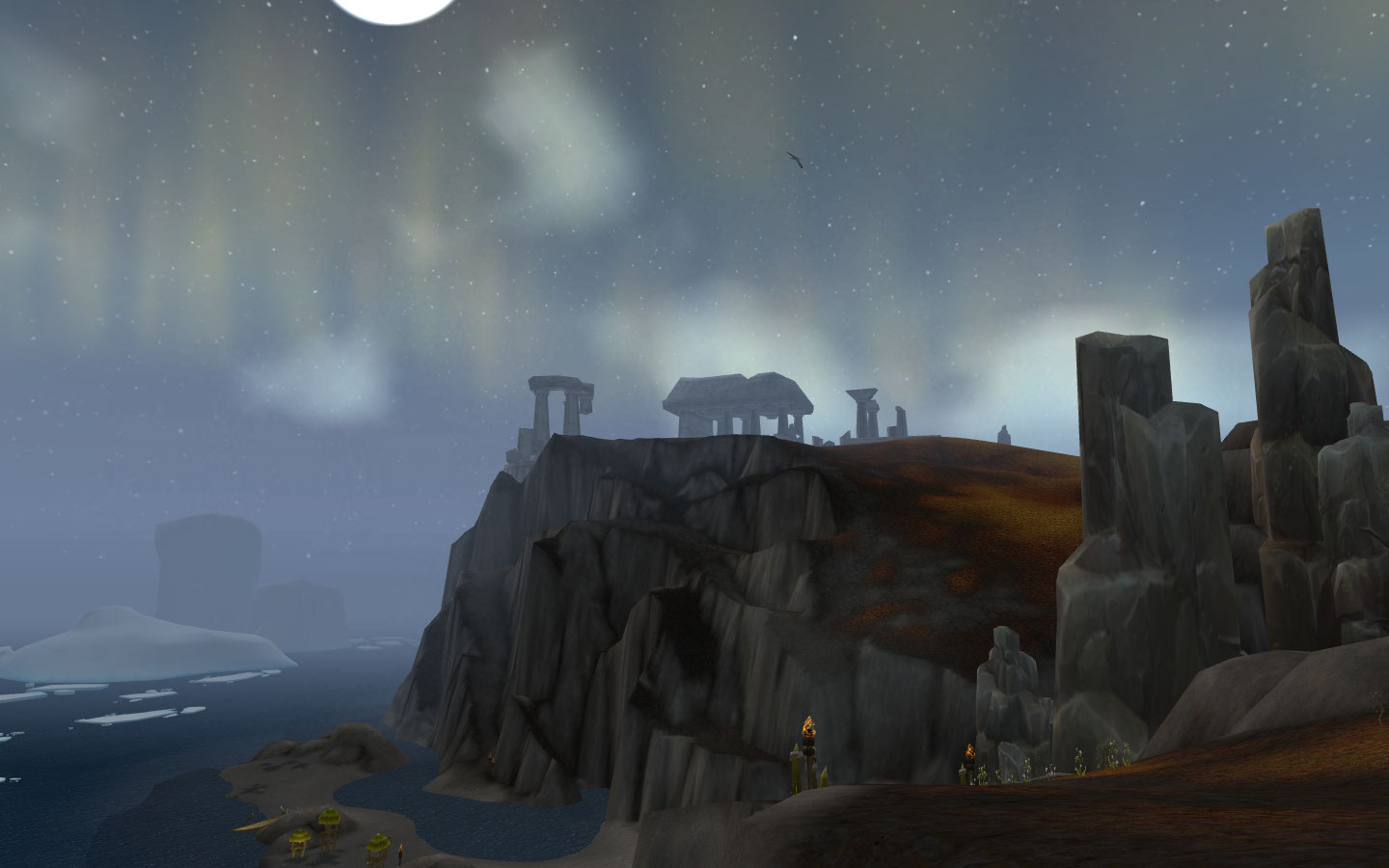
For the raiders among us, the fate of Naxxramas became a hot topic. One of the hardest raids in vanilla had only been experienced by a tiny number of players at the time. According to unconfirmed estimates, that was about one percent of the entire subscriber base. Even during The Burning Crusade era, the instance demanded a good knowledge of the tactics and a large party of twenty or more well-geared teammates. And yet, people continued to run it, not least for the legendary staff of Medivh – Atiesh. The developers’ decision to remake Naxx in formats relevant for Wrath of the Lich King sparked another wave of confusion. So Naxx-40 was transformed into Naxx-10/25. Atiesh and the Tier 3 raid set were removed from the game forever. Having flown from the Plaguelands to Northrend, Naxx-40 went from being an impassable raid into a sandbox for beginner casuals.
Patch 3.0.2: “Echoes of Doom”
The Wrath of the Lich King pre-patch, “Echoes of Doom,” arrived a month before the actual expansion launched on October 14th. Its main highlights included:
- The much-anticipated achievement system.
- A new profession: Inscription.
- Barber shops where you could change your hairstyle.
- Talent trees with the number of points increased to 51.
- A slightly modernized character parameter system.
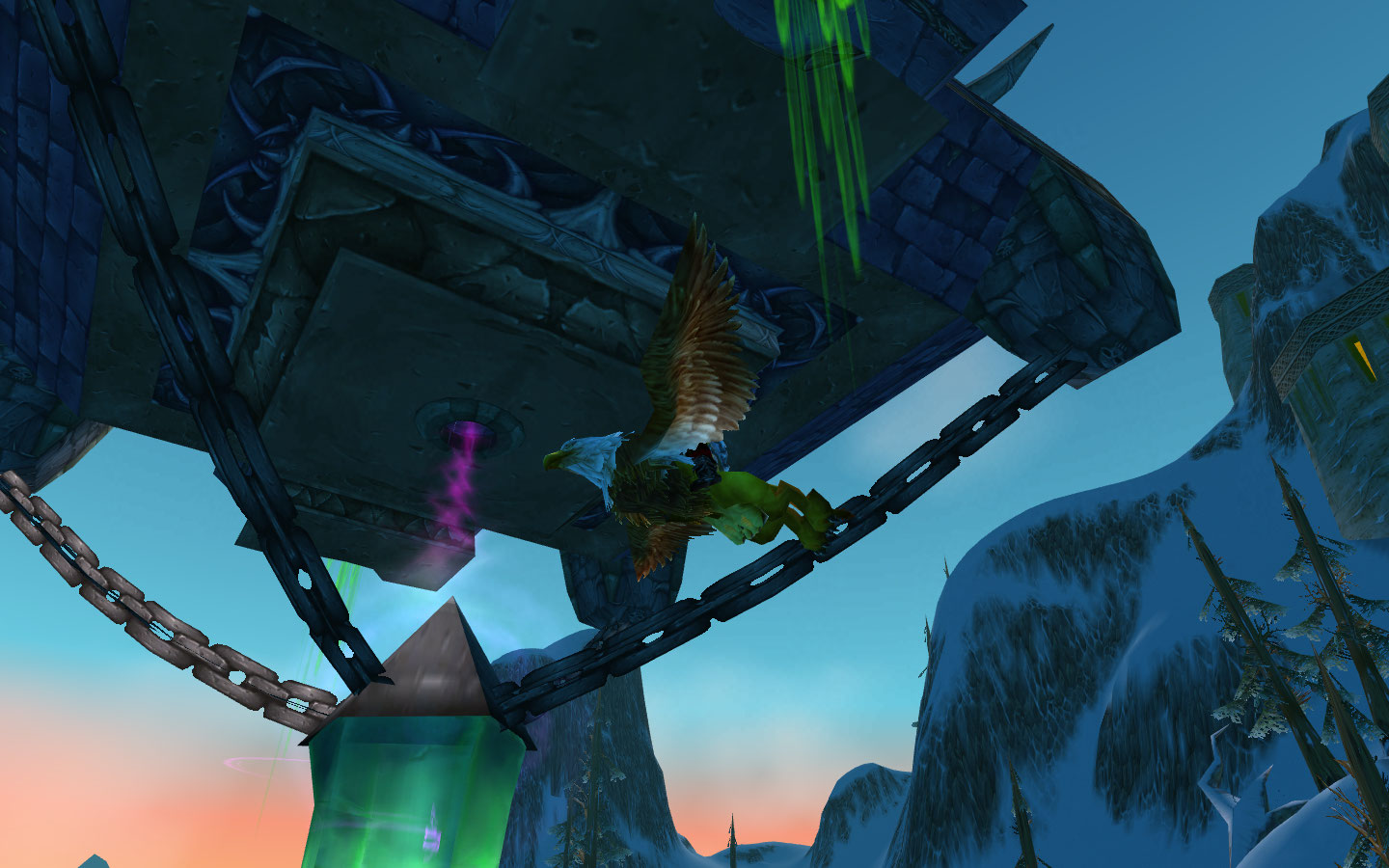
In terms of content, the completion of the port in Stormwind was a major landmark. The Alliance capital grew by about a third. New routes opened up from the port, including a new one to Northrend. Naxxramas, meanwhile, took flight to the north, and during the move, the necropolis staff managed to lose all the Tier 3 raid sets and the wreckage of Atiesh. Following Naxx, Dalaran also soared to Northrend, destined to be a neutral capital for the next two years.
For hardcore raiders, patch 3.0.2 will be remembered for another reason: it subjected all Burning Crusade raid encounters to a global nerf. Not only was their health reduced significantly (by 30%), but the amount of damage they dealt was also dramatically decreased. Some purists viewed this as a disaster, believing that the patch had ruined Burning Crusade PvE. But the changes weren’t limited to just the raid bosses. The quest to access Onyxia’s Lair was also removed. And for those of us who were still working our way up, the amount of experience needed to reach new levels was reduced by a welcome 20%. Personally, I saw this as good news, as it brought that coveted level 70 much closer.
The user interface also underwent some key changes. First, a guild calendar appeared. Second, mounts and pets no longer took up precious space in our bags or bank slots; instead, they received their own special tab in the character menu. Keys were also given their own separate tab.
What else made 3.0.2 so memorable? Of course, the zombie invasion. Braaaaiiiiinnnnzzzz!!! This world event was similar to what we’d already seen in patch 1.11 when Naxxramas came out. Flying necropolises appeared across Azeroth, unleashing hordes of undead. Zombie Invasion 2.0 was quite spectacular. Zombies could and should be killed, and the shards they dropped could be used to buy all sorts of useful goodies, including low-level epics. But the most interesting part was that the Scourge also brought a contagious infection that affected both players and NPCs. If infected, you had to find a healer (either an NPC or a player who could dispel the infection) within ten minutes. If you didn’t, you transformed into a zombie, gaining interesting abilities such as the ability to infect others and the ability to explode. For a couple of weeks, the capitals of the cities were periodically transformed into zombie-ridden graveyards, as griefers became kamikaze zombies, blowing themselves up in crowded areas, disrupting auctions, vendor transactions, and quest turn-ins. In general, it was chaotic fun.
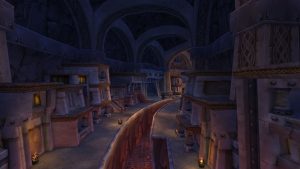
It might seem odd, but this chaotic fun didn’t please me much because it often slowed down the leveling process. I remember stumbling upon complete mayhem in Ironforge—the auction house and the throne room were literally littered with bones. To be on the safe side, I fled to Nagrand and reduced my visits to the capitals to a minimum.
Oh, and I almost forgot: patch 3.0.2 also brought shadows to Azeroth.