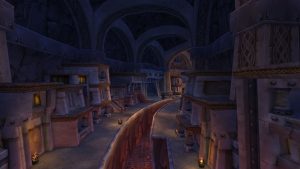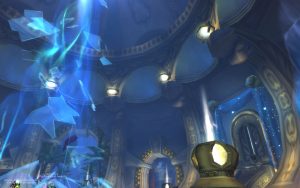
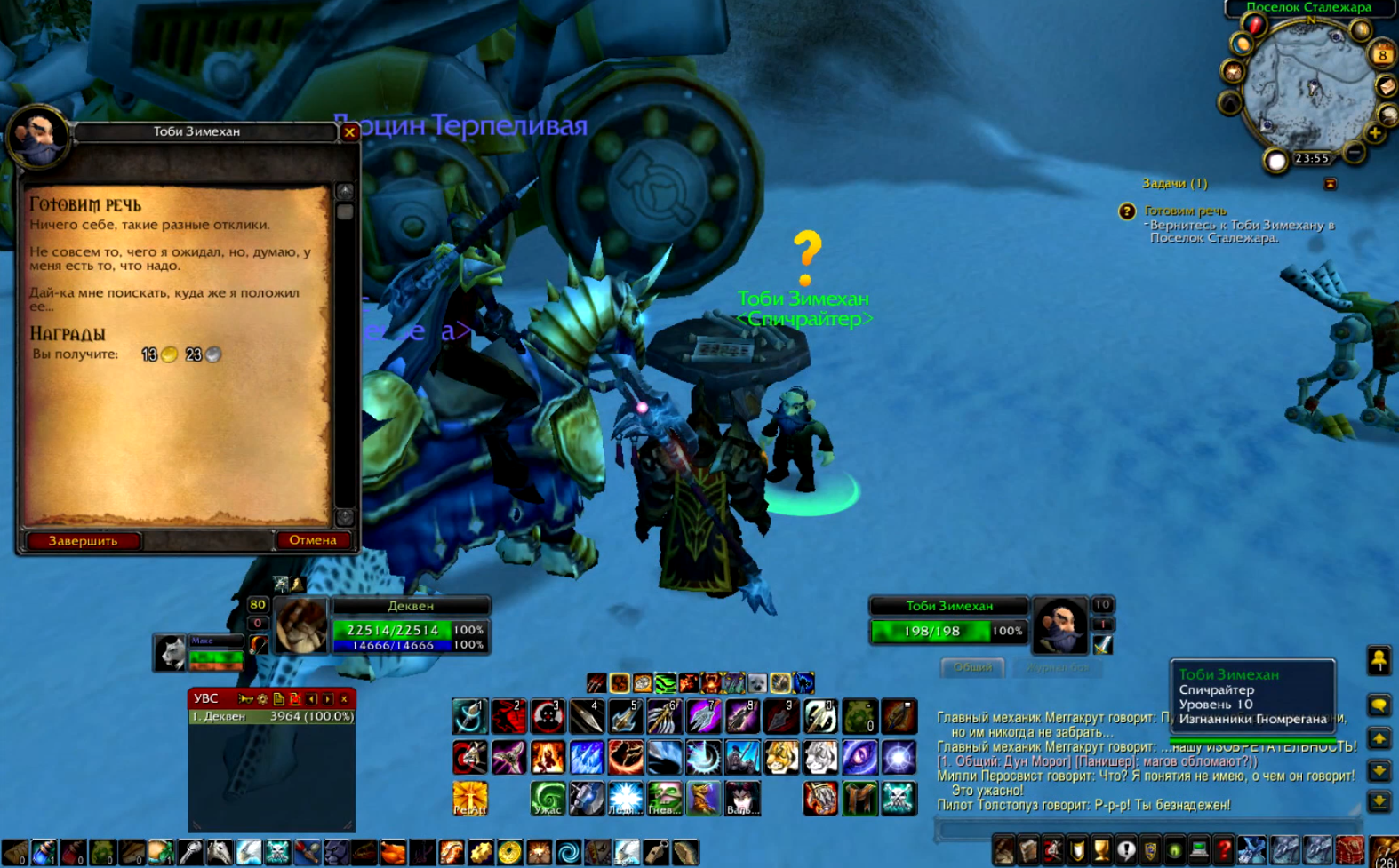
In early September 2010, a small event took place in WoW. Or rather, two events, since they were different for each faction. The Horde liberated the Echo Isles, and the Alliance helped the gnomes reclaim Gnomeregan. The events were called “Zalazane Must Fall!” and “Operation Gnomeregan.” I didn’t participate in the Horde event because I didn’t have alts on that side, but I did provide brotherly assistance to the gnomes.
Previous: WoW Player Diary. Part 14. Celestial steed and Cataclysm beta
For those unfamiliar with the lore, let me remind you: before the Third War, the gnome capital of Gnomeregan was attacked by troggs. High Tinker Mekkatorque, the gnomes’ king at the time, trusted his chief mechanic, Thermaplugg. As a result, Gnomeregan was subjected to radioactive irradiation to drive out the troggs. Initially, this worked, but then the gnomes themselves began to die from the radiation. Most of the capital’s population fled to Ironforge; the rest either died or mutated. Thermaplugg not only turned into a mutant but also proclaimed himself the sole ruler of Gnomeregan. Now, many years later, Mekkatorque called upon his brethren – and the forces of the Alliance – to retake the capital.
The Horde event involved players helping the Darkspear trolls, led by Vol’jin, retake the Echo Isles.
The events were short, and the rewards weren’t particularly amazing, but a little movement in Azeroth’s static world is always fun. Plus, the gnomes and trolls received new starting locations, which was also good.
Waiting for the Storm
One piece of news that once stirred up the community was a “blue” post (from a Blizzard employee) stating that Zul’Gurub, the vanilla 20-man raid instance, would no longer be a raid (“Zul’Gurub is gone as a raid instance come Cataclysm”). Worried players began discussing this with trepidation, lamenting another “sacrilege” by Blizzard.
Truthfully, Zul’Gurub hadn’t been a relevant raid instance for a long time, at least not formally. Only some old timers and nostalgic players still stuck at level 60 would attempt it with 20 people. After WotLK’s release, it was actively being solo-farmed. I remember, as a “blue-green” geared level 80, I could easily handle trash packs, while more skilled guildmates in Tier 7-7.5 gear were soloing ZG bosses all the way up to Hakkar and players in Tier 10 could easily take him down. The instance was certainly luxurious, no doubt, but by and large, only mount collectors still went there. After Cataclysm’s release, these mounts were supposed to be removed from Zul’Gurub, which was slated to remain a questing zone until Patch 4.1.
What else was going to be removed? The titles “Immortal” and “Undying.” These titles were awarded for completing Naxxramas (10- and 25-man versions, respectively) without a single death in the raid. It sounds simple, and players were already in “overgear” from ICC, but people still died in Naxxramas in the fall of 2010. Why? Well, imagine lagging during the Heigan dance and not reaching a safe spot – that’s it, no achievement. Or perhaps your internet connection dropped while circling around Thaddius’s. However, deaths also occurred due to simple “wagoning” (being carried) by less skilled players. I remember one friend complaining he died on Heigan precisely because of such an oversight by someone else.
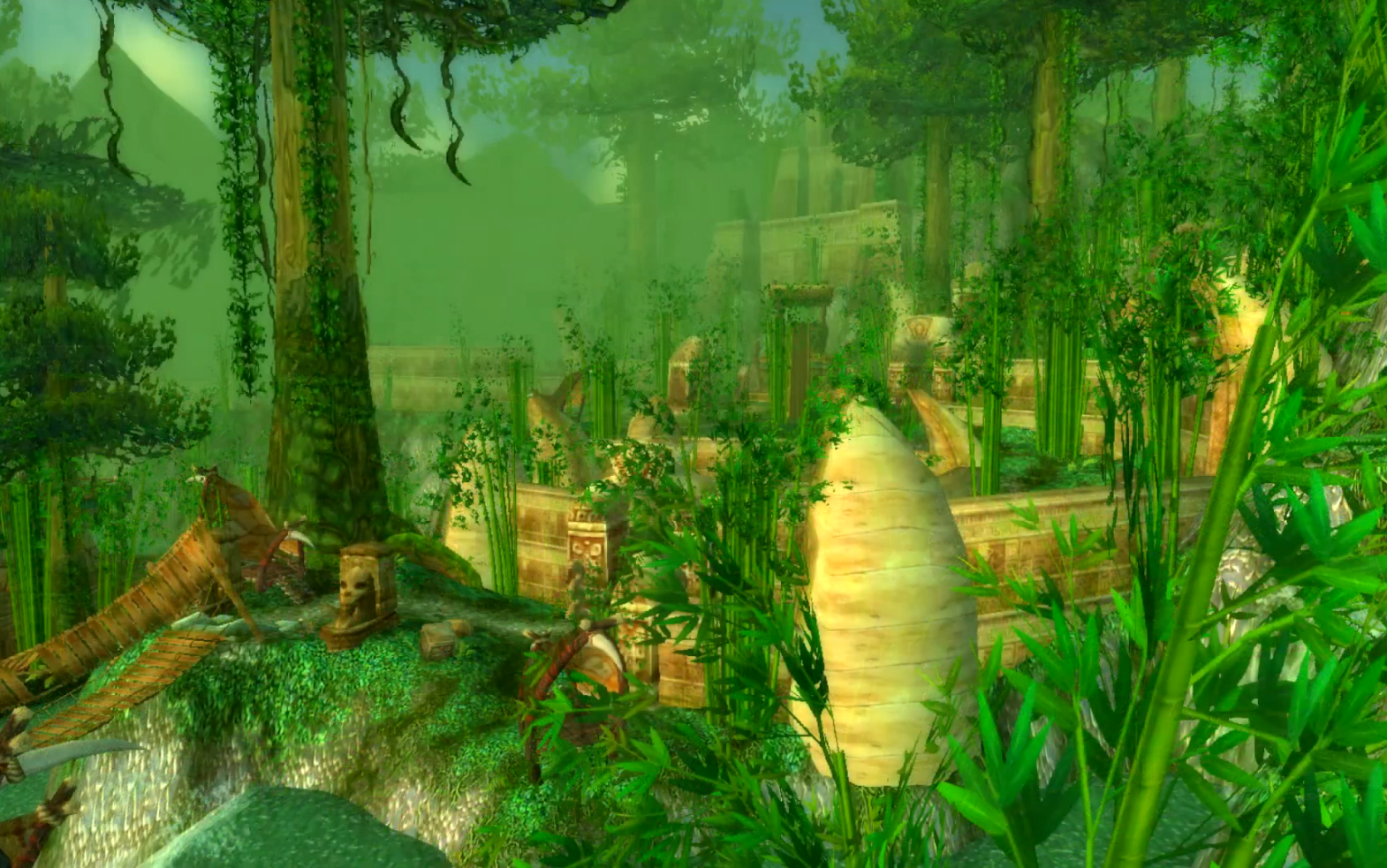
But the most significant change was that the Old World, as we knew it, was fading into the past. Those original Eastern Kingdoms and Kalimdor were heading for oblivion. On the eve of Cataclysm, it was an interesting time. Many understood that Blizzard had decided to revamp the Old World, which often lacked detailed textures and sufficient polygons. Some guilds even organized “farewell tours” through the familiar zones.
I think I wouldn’t be wrong to say many were in high spirits, eagerly awaiting the new expansion. The Old World rework wasn’t just about appearance and zone design; quests were also undergoing a global overhaul. The chronology changed dramatically too – events in the original zones would now take place after the Northrend campaign. In theory, this should have reignited the interest of veterans who had grown weary of the old continents over the preceding five years. New players, meanwhile, could immediately dive into current events without slogging through months of outdated content.
In other words, the concept itself looked sound and promising. I’ll explain later why it all “went down the drain,” but at that moment, everything looked as good as it possibly could. In October 2010, Blizzard reported that subscriber numbers had reached 12 million. The project was being developed by one of the world’s leading game studios with extensive experience. Other MMOs in the European and American markets were nowhere near WoW’s level. EverQuest 2, a contemporary, stood modestly on the sidelines with its 26 servers, and its transition to Free-to-Play (F2P) didn’t inspire optimism about its future. Newer projects were often positioned as “WoW killers”; SWTOR, for instance, was menacingly “hissing with lightsabers,” and at the time, it seemed like a real contender for the “king of the mountain” title. As the future showed, neither RIFT, nor Guild Wars 2, nor SWTOR managed to push WoW off its throne. Even after the disastrous year of 2011, when the first serious player exodus began, WoW held its ground; its competitors were still far behind.
Wrath of the Lich King. Conclusion
October 2010. WoW version 3.x.x was nearing its end. Even now, looking back from 2020, more than ten years later, can we say the second expansion was a milestone in the project’s history? Why? Let’s delve deeper.
From a plot perspective, it marked the end of the Lich King’s era – an iconic character central to the storyline since Warcraft III. For some players, his death signified the end of the Warcraft story; they viewed the subsequent fuss with Deathwing as heresy and foolishness, and consequently left the game. I understand them now because, after the Battle for Azeroth expansion and the Shadowlands announcement, I feel similarly – my Warcraft ended with the Legion expansion. Regardless, this chapter was closed, plot-wise. An entire era finally ended.
What did WotLK become in terms of game systems and gameplay?
There was an opinion, zealously supported by WoW veterans that WotLK was a step (or even two) towards casual players. “Simplification of content,” “casualization,” “the galaxy is in danger” – these were common refrains. But was it really so? I think not quite. Yes, you could get into Icecrown Citadel and clear it on normal mode, and it was much easier than, say, Sunwell Plateau in its prime. But was it truly about simplification? Rather, we were dealing with an expansion of the difficulty spectrum. If before there was primarily one mode – “very difficult” – then WotLK, like many other computer games, introduced modes like “normal,” “difficult,” and even “very difficult” (if we consider achievements like “Alone in the Darkness”).
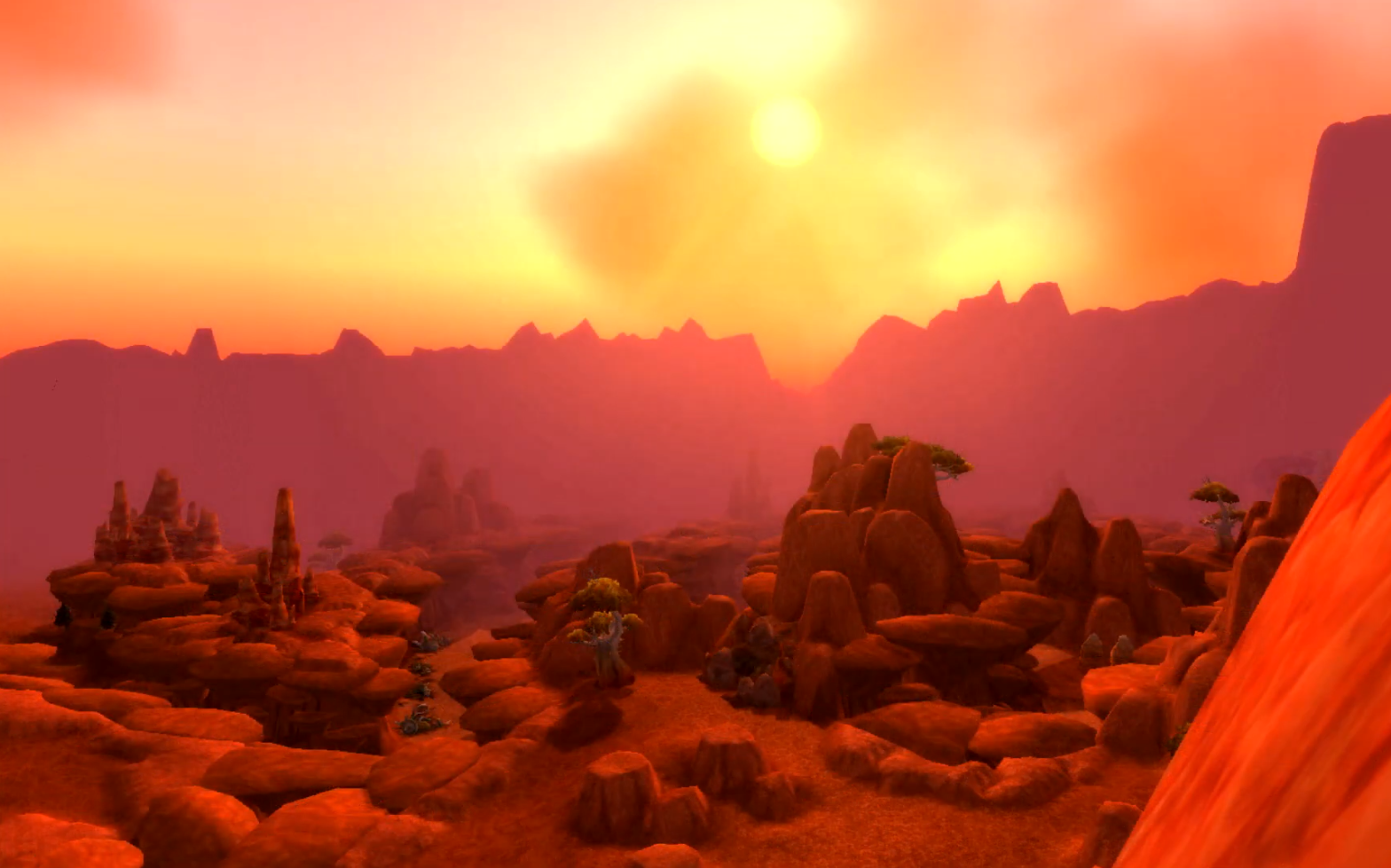
Moreover, these changes affected not only the endgame but other game content as well. Yes, lowering the level requirements and prices for mounts might have felt like an insult to game veterans, but on the other hand – why not? I remember leveling my main in the Barrens before Patch 2.4.3 (the first price and level reduction for mounts). A quest giver would be on Ratchet’s hill, and the quest objectives would be in the opposite part of the zone, on the coast, or even on islands. You had to run back and forth on foot. Perhaps such things were design flaws, which the availability of a mount at level 20 minimized. After all, it’s an old truth: a car isn’t a luxury, but a means of transportation. “Do you want checkers or a ride?” (Meaning: do you want to show off, or just get going?) Most people, especially at low levels, just need to “ride.” If you need “checkers” to stand out, then go attempt Yogg+0 and earn Mimiron’s Head.
But let’s return to the endgame. I think TBC raiders remembered well how difficult it was to gain access to high-level content. To get into Karazhan, you had to complete a long quest chain involving Heroic dungeon runs, and to get into those Heroics, you first had to earn Honored reputation with various Outland factions. Without going into detail, you had to work hard. This was an implicit content gating system, which in WotLK was replaced by gradual boss access within raids. Of course, it would have been nice if access unlocked after completing quests, but not such arduous ones. Then, after Patch 3.2, when the emblem system was reformed and useful features like raid save extensions were introduced, the accessibility of raid content became even higher.
Was this good or bad? I think it was good. The division into normal and hard modes led to an expansion of the difficulty spectrum. If you wanted to go fight – there you go, normal mode. If you wanted to “bang your head against the wall,” here were the bosses’ “hard faces” – bang away, and eventually, you’d get some special perks.
In my opinion, WotLK was good precisely because it offered choice. Newly minted level 80s were given opportunities to progress, with paths leading towards hardcore play while still leaving room for casual engagement. If before it was either “raiding as a second job” or “pumping up an alt,” now you could experience the endgame without dedicating your life to it 24/7. And that’s not bad. Despite all the complaints (and when weren’t there complaints?), the game became comfortable for many.
In other words, WotLK wasn’t a “casualization” of the game in a purely negative sense; rather, the complexity of the endgame and some mechanics that simply delayed progression were streamlined. The same applied to leveling from 1 to the cap. Perhaps this was one of the reasons WotLK saw the peak of the game’s popularity, and why this expansion is still called one of the best.
Next: WoW Player Diary. Part 16. Netherwing drakes and Elementals invasion